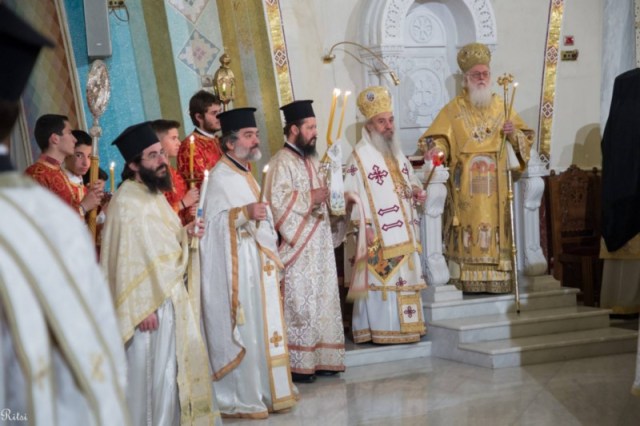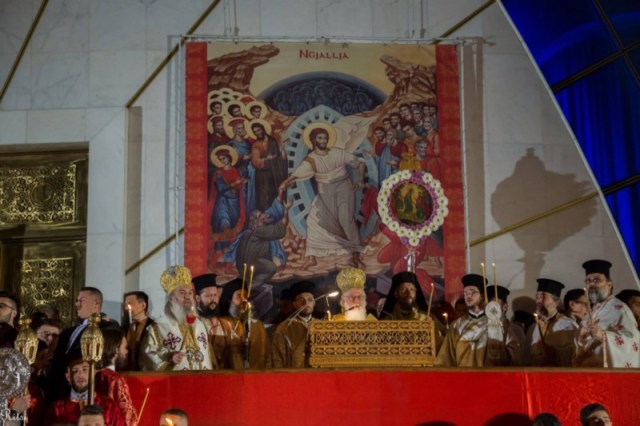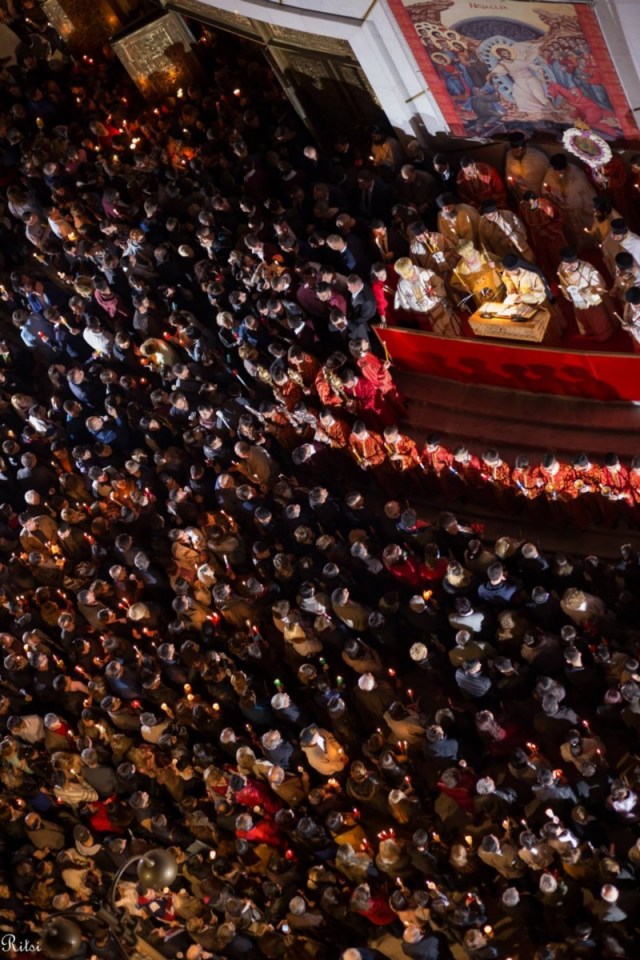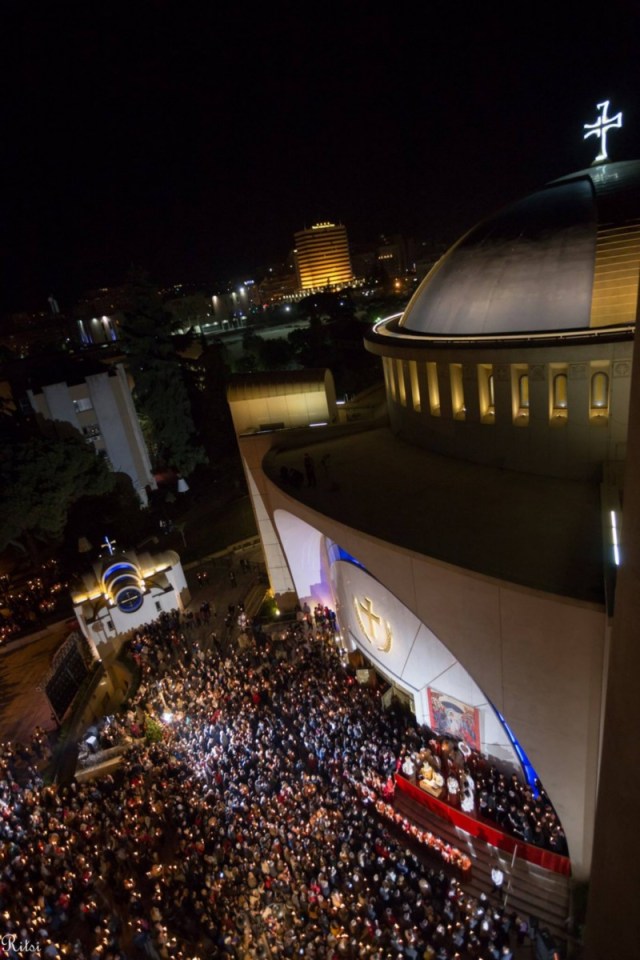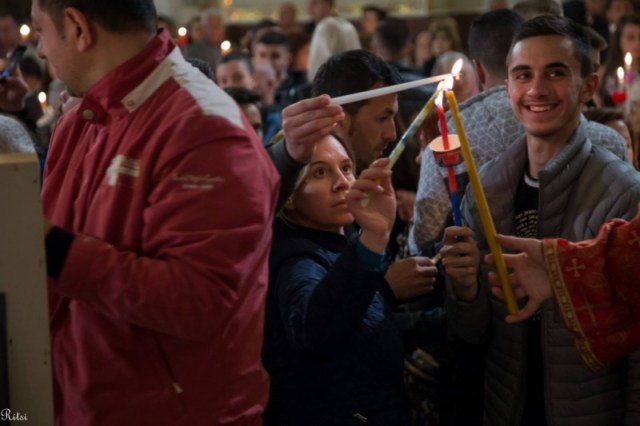
Who am I in this crowd?

palm sunday

In the Name of the Father, the Son and the Holy Ghost.

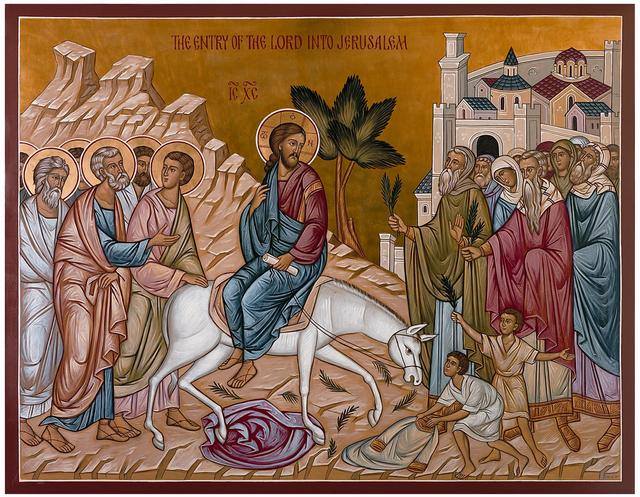
Today Christ enters the path not only of His sufferings but of that dreadful loneliness which enshrouds Him during all the days of Passion week. The loneliness begins with a misunderstanding; the people expect that the Lord’s entry into Jerusalem will be the triumphant procession of a political leader, of a leader who will free his people from oppression, from slavery, from what they consider godlessness – because all paganism or idol-worship is a denial of the living God. The loneliness will develop further into the dreadful loneliness of not being understood even by His disciples. At the Last Supper when the Saviour talks to them for the last time, they will be in constant doubt as to the meaning of His words. And later when He goes into the Garden of Gethsemane before the fearful death that is facing Him, His closest disciples, Peter, John and James – whom He chose to go with Him, fall asleep, depressed, tired, hopeless. The culmination of this loneliness will be Christ’s cry on the cross, “My God, My God, why hast Thou forsaken me?” Abandoned by men, rejected by the people of Israel He encounters the extreme of forsakenness and dies without God, without men, alone, with only His love for God and His love for mankind, dying for its sake and for God’s glory.

The beginning of Christ’s Passion is today’s triumphal procession. The people expected a king, a leader – and they found the Saviour of their souls. Nothing embitters a person so much as a lost, a disappointed hope; and that explains why people who could receive Him like that, who witnessed the raising of Lazarus, who saw Christ’s miracles and heard His teaching, admired every word, who were ready to become His disciples as long as He brought victory, broke away from Him, turned their backs on Him and a few days later shouted, “Crucify Him, crucify Him.” And Christ spent all those days in loneliness, knowing what was in store for Him, abandoned by every one except the Mother of God, who stood silently by, as She had done throughout her life, participating in His tragic ascent to the Cross; She who had accepted the Annunciation, the Good Tidings, but who also accepted in silence Simeon’s prophecy that a sword would pierce her heart.

During the coming days we shall be not just remembering, but be present at Christ’s Passion. We shall be part of the crowd surrounding Christ and the disciples and the Mother of God. As we hear the Gospel readings, as we listen to the prayers of the Church, as one image after another of these days of the Passion passes before our eyes, let each one of us ask himself the question, “Where do I stand, who am I in this crowd? A Pharisee? A Scribe? A traitor, a coward? Who? Or do I stand among the Apostles?” But they too were overcome by fear. Peter denied Him thrice, Judas betrayed Him, John, James and Peter went to sleep just when Christ most needed human love and support; the other disciples fled; no one remained except John and the Mother of God, those who were bound to Him by the kind of love which fears nothing and is ready to share in everything.

Once more let us ask ourselves who we are and where we stand, what our position in this crowd is. Do we stand with hope, or despair, or what? And if we stand with indifference, we too are part of that terrifying crowd that surrounded Christ, shuffling, listening, and then going away; as we shall go away from church. The Crucifix will be standing here on Thursday and we shall be reading the Gospel about the Cross, the Crucifixion and death – and then what will happen? The Cross will remain standing, but we shall go away for a rest, go home to have supper, to sleep, to prepare for the fatigues of the next day. And during this time Christ is on the Cross, Christ is in the tomb. How awful it is that, like the disciples in their day, we are not able to spend one night, one hour with Him. Let us think about this, and if we are incapable of doing anything, let us at least realise who we are and where we stand, and at the final hour turn to Christ with the cry, the appeal of the thief, Remember me, Lord, in Thy Kingdom! Amen.

Metropolitan Anthony of Sourozh
THE LORD’S ENTRY INTO JERUSALEM
1980, 30 March

Kyra Sarakosti

LENT1

lent5

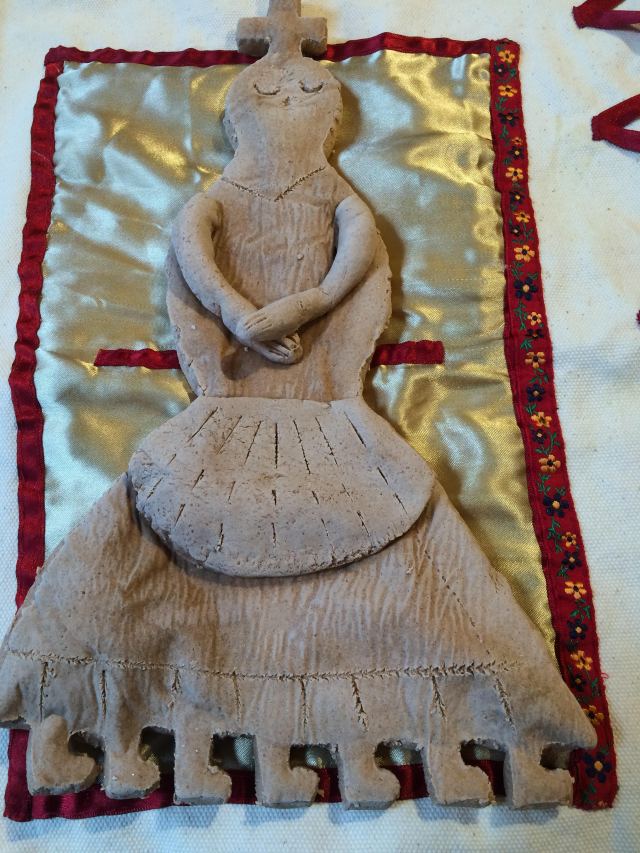
Last Monday some ladies at our parish baked  our annual Kyra Sarakosti, or Lady Lent, “cookies”.

 ­ ‘LADY LENT’: AN OLD GREEK EASTER TRADITION

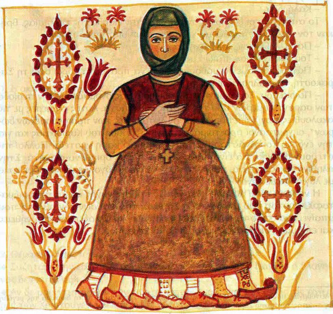
An old Greek custom that still survives in modern, Orthodox Christian families throughout Greece with different vari­ ations, is that of Kyra Sarakosti, i.e. Lady Lent. This is a custom associated with the fasting period of Great Lent preceding the Sunday of Pascha; Kyra Sarakosti is used as a calendar that counts the 7 weeks of Lent.

lent2

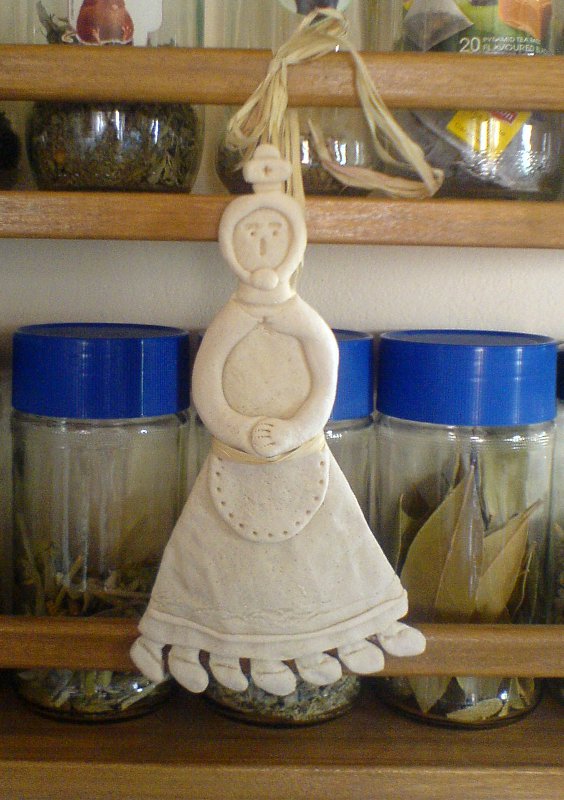
Kyra Sarakosti, is a small figure, a paper drawing or sometimes baked of bread dough, which features something really unusual, a lady that looks  like  a  nun who has seven legs and her  hands  are folded as if in prayer. Lady Lent’s seven legs, each represent one week of the fasting period, from Clean Monday to the Holy Week. The cross on her forehead is the symbol of her faith. She has her arms folded because indeed she is constantly praying. She has no mouth, not only be­cause she can’t eat, as she is fasting, but also to avoid engaging in any idle talk. Fi­nally, she has no ears, or  they  are  covered with her scarf, so as not to listen to any calumny or judging, especially in this period of rigorous ascetic effort.

lent3

Lady Lent has been used as a “calen­dar” of Lent all over the country. Each week, starting on Saturday after Clean Monday, the faithful would cut  one  leg  off. The last leg would be cut off on Holy Saturday. In some areas, the seventh leg was squeezed inside the bread of Resur­rection, and was considered to bring blessing to whoever found it.


Recipe: Orthodox Mum

Therefore Go, Οὖν

light2

“Our Easter joy is offered in order to be shared with others. … A pious custom among Orthodox Christians is to share with others the light of Christ the moment their candle is lit. This sharing of Christ’s Light highlights the duty of the faithful to evangelise, to spread the Evangelion (Ευ-Αγγέλιον), the Good News of our Lord’s Resurrection, like the Apostles. Our resurrected Lord said: “All authority in heaven and on earth has been given to me.”  And He added:  “Therefore go and make disciples of all nations” (Matthew 28:18-19). Πορευθέντες οὖν.

So, there is one consequence, one “therefore”, one “οὖν”: Don’t limit yourselves to your own personal salvation and joy; you have a holy responsibility to spread this Evangelion to all those who ignore this Truth. This Hope must not be kept hidden, must not be confined to only one community. This Hope is for all peoples, for the renewal of all mankind.” (Archbishop Anastasios of Albania, Easter Message 2017)

light1

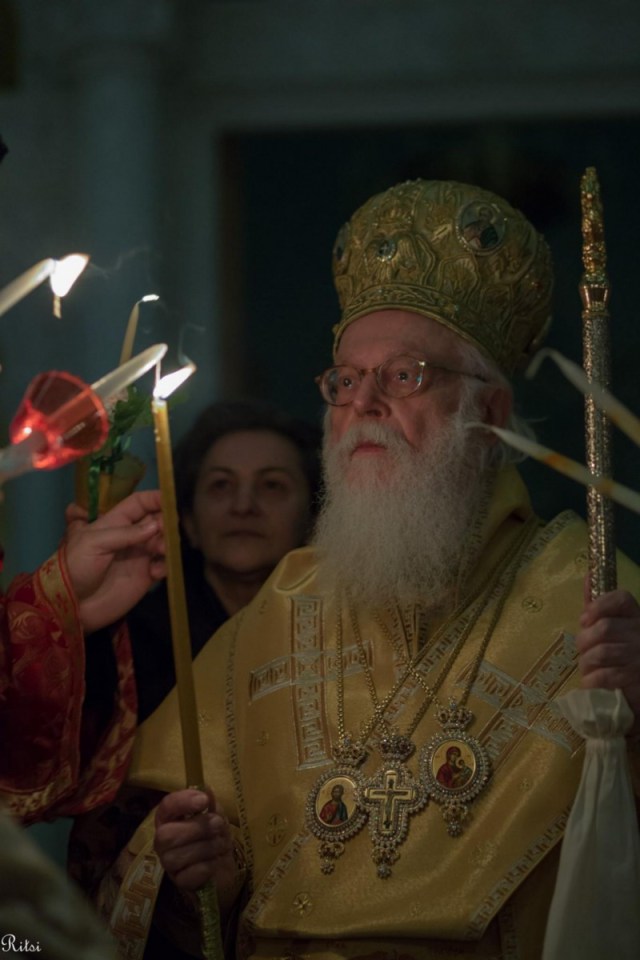
“A Candle Before the Icon”: Archbishop Anastasios

a1a2

“As a young person I had been moved by stories of Father Damian, a Catholic priest who served lepers in Hawaii, and also Albert Schweitzer. I asked myself whatever happened to our missionary tradition in the Orthodox Church? Where were the Orthodox missionaries? What are we doing to share our faith with others? What are we doing to reach all those people who have never heard the Gospel? I realized that indifference to missions is a denial of Orthodoxy and a denial of Christ. How had it happened that a Church called to baptize the nations was so indifferent to the nations? Saint Paul brought the Gospel to Greeks. Who were we bringing it to?”

It was a pivotal question that would shape the rest of his life.

a3

Indifference to missions is a denial of Orthodoxy and a denial of Christ.

a4a5

‘Krishti u ngjall, Zoti eshte me ne, lavdi Zotit!’ — ‘Christ is risen, God is with us, Glory to God!’

a6a7a8

While his official title is Archbishop of Tirana and All Albania, Anastasios has occasionally been called the Archbishop of Tirana and All Atheists. It isn’t a title he objects to. “I am everyone’s archbishop. For us each person is a brother or sister. The Church is not just for itself. It is for all the people. As we say at the altar during each Liturgy, it is done ‘on behalf of all and for all. Also we pray ‘for those who hate us and for those who love us.’ Thus we cannot have enemies. How could we? If others want to see us as enemies, it is their choice, but we do not consider others as enemies. We refuse to punish those who punished us. Always remember that at the Last Judgment we are judged for loving Him, or failing to love Him, in the least person. The message is clear. Our salvation depends upon respect for the other, respect for otherness. This is the deep meaning of the Parable of the Good Samaritan — we see not how someone is my neighbor but how someone becomes a neighbor. It is a process. We also see in the parable how we are rescued by the other. What is the theological understanding of the other? It is trying to see how the radiation of the Son of God occurs in this or that place, in this or that culture. This is much more than mere diplomacy. We must keep our authenticity as Christians while seeing how the rays of the Son of Righteousness pass through another person, another culture. Only then can we bring something special.”

a9a10a12

People look at the difficulties of life here and say to me, ‘How can you stand it? It is so ugly!’ But for me it is so beautiful! It is God’s blessing to be here — not the blessing I imagined but the one I received. …

a13

“People sometimes ask me about my expectations, but I don’t know about the future! You can only do your job with love and humility. I am not the savior of Albania, only a candle in front of the icon of the Saviour.”

For more insights into Archbishop Anastasios legacy go to “A Candle Before the Icon: Archbishop Anastasios”, from Jim Forest’s book Resurrection of the Church of Albania, WCC Publications

Don’t spill the Grace. Keep it there!

Sblessed seraphim.jpg

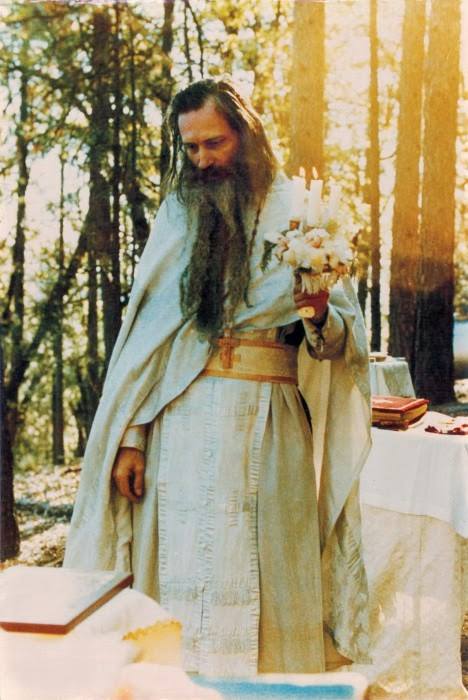
One young convert, radiant after experiencing his first Pascha in the wilderness, was asked by Fr. Seraphim: “Well, how did you like the Feast?”

“It was wonderful!” replied the elated pilgrim.

“Don’t waste what you’ve been given,” Fr. Seraphim said, echoing the words of Bishop Nektary. “Don’t spill the grace. Keep it there!” As he said this, Fr. Seraphim tapped the young man’s chest, right on his heart.