Saint Paisios the Hagiorite (1924-1994) – II

At some point, the Cell’s door, of the old and poor building, would open and the Elder, who had been inside involved in discipline and heart prayer for the salvation of his soul and the souls of his brothers, would appear. His face was always exhilarated and his attitude cordial. He would receive us and ask us to sit in the “outdoors dorter” on seats made of pieces from tree trunks. He would shake our hands and at the same time offer us loukoumia and water according to the tradition of Mt. Athos.
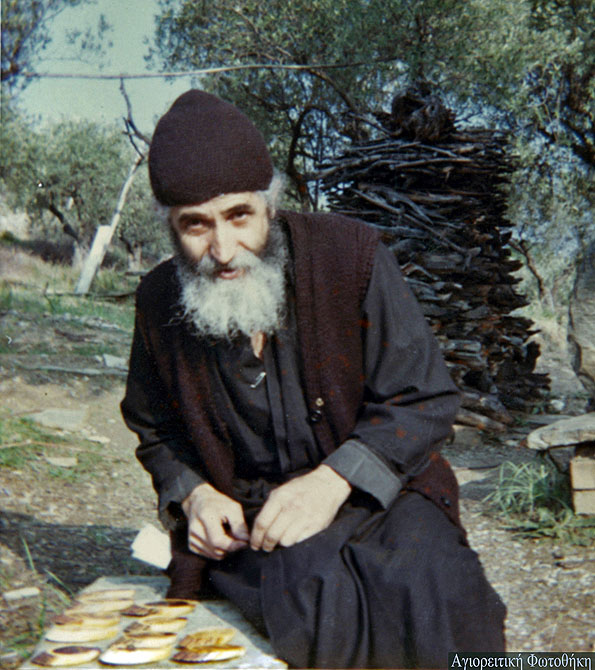
Paisios at Kelli Panagouda

There, under the trees, with the songs of the birds “as the vocal drone”, the Elder would start talking to us with “the words of eternal life” (John 6:68) either answering our questions or making comments on his own on the basis of information from “above” about the needs of each one of us. Here is the miraculous thing! The pilgrims were of various ages, professions, characters, spiritual and intellectual levels. Some of them were conscious of who was sitting in front of them and exactly what they were looking for. Some were there because they had heard something about him. Others were there with an ill-tempered and negative mood. He, guided by the Holy Spirit, offered “as every man had need” (Acts 2:45 ).

I will never forget, in relation to the above, the Elder’s behaviour towards a Spanish student of Fine Arts, follower of the Pope, who happened to be amongst us in the “outdoors dorter” at some visit. At some point, the Elder turned to him with affection and interest making use of some Italian words and phrases he remembered from the Italian occupation so that he could communicate with him. Then, he gave him many pieces of advice in the Greek language and revealed to him many truths that, as he explained to us, the Holy Spirit would help him feel regardless of the fact that the different language would not allow him to understand. More specifically, when another visitor made the comment that “the foreign student does not understand what you are saying to him in Greek”, he answered that “he will understand what he is meant to understand”.

His advice to all his visitors was to have a spiritual father. This is why after giving answers and advice to questions or problems put forward by the people, he would finally send them to their spiritual fathers to lay the burden of their sins, which were the cause of all problems, under their stoles.

Many Christians, therefore, leading autonomous lives, selfishly, as orphans, “as sheep having no shepherd” (Matthew 9:36 ) took his advice, found a spiritual father and started living according to the Church. Their lives and the lives of the ones around them changed. Here I would like to mention something that the Elder always recommended for his wedded visitors. “Have the same spiritual father with your wife. Because as the carpenter uses the same plane to work on two pieces of wood and make them fit, the same way the spiritual father will use the same “plane” to work on the character of both spouses so as to make them fit. Whereas if you have different spiritual fathers, you will face difficulties.”
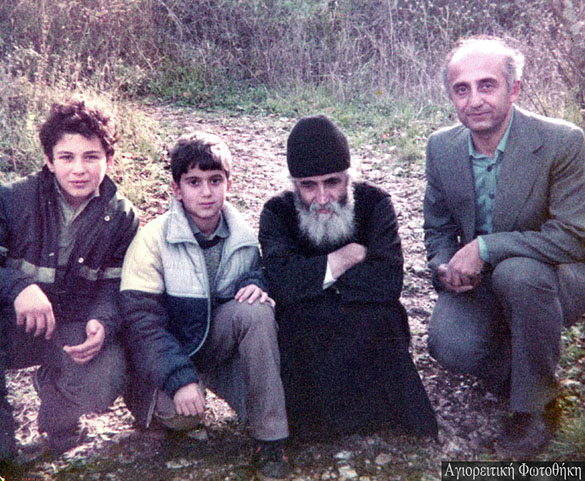
Paisios monachos Agioreitis26

I would like to mention something else extremely important that the Elder said on another occasion. I was with a group of people in the “outdoors dorter”, when another group came, amongst whom there was an assistant professor of the Medical School of the University of Athens who held the Elder in great veneration. The professor asked Fr. Paisios at some point with pain, interest and love: “There are, Elder, many colleagues of mine, doctors, who have good intentions, good feelings, “bowels of mercies” (Colossians 3:12 ) but do not believe. What can we do for them?” “Listen,” says the Elder”, “pray for them because under these circumstances they deserve God’s mercy.” He had said the same about some teachers and professors on another occasion.

The Elder, as a genuine man of God, had consolidated and immovable ideas “in the things he hast learned and hast been assured of” (2 Timothy 3:14 ). He knew and taught “by word and deed” (Romans 15:18 ) that in the issues of faith there is no swaying, negotiation or compromise. He clearly knew that there is no greater unhappiness and bigger danger for the Christian than to deny his faith and accept deceit. As we know, many deceived people, people that did not feel rest, urged by his reputation, went to meet him and discuss their existential problems. It is true that many of those people went there full of delusions and left repented, seeking then guidance in their spiritual fathers.

If, therefore, someone gets involved with some of the heresies and para-religions that have flooded our country mainly in recent years as well as if someone advances in the initiations, rites and other demonic activities imposed in order to become a member, this means a conscious or unconscious negation of the faith to the Trinitarian God, Christ, the Church and the Baptism, I once asked the Elder: “What should we do with these people when they repent and want to return to the Church?” “You will say,” he said, “the Service for the One that returns to the Orthodox Church. The people that return will denounce the bad faith with libel, they will confess the faith of the Church by reciting the Symbol of Faith and then you will anoint them with the holy unction.”

All of us are very much concerned about our dear departed, their state and what we can do about them. We used to ask the Elder about this and wanted really convincing answers. He would emphatically advise us to pray a lot for them. “Prayers,” he said, “memorial services, liturgies, mercies are very much to the benefit of the departed ones.” “You should pray more,” he added, “for the departed ones than the living. Because there is nothing they can do on their own any more, but we can help them attracting God’s mercy through praying and the other means we have mentioned so that their state can be improved or even change, because they are still under judgment.” And he concluded by saying in his characteristic way: “Is it a small thing to take our departed one from a sunless basement to a sunny apartment through our prayers?”

At some point, I remember, he mentioned something overwhelming as regards the departed ones and our stance for them. There was a suicide once, a person who put an end to his life by falling from a bridge into a river. This man, as the Elder said, repented while he was falling, asked for forgiveness, his repentance was accepted and his soul was received by a Lord’s angel. We must learn not to despair; and pray for our brethrens asking for God’s mercy and according to the words of St. Isidoros Pilousiotis: “do not forerun God’s judgment.” (P. G. 78, 377) and be judges of the others.

Georgios Chr. Efthymios

Source: Pemptousia

The Shroud and the Furnace

patriarch_pavle


“The priest’s cassock is the flag of the Church of our Christ: for this reason we must try hard to honor it, we who wear it, with a holy life, so that those who don’t wear it will honor and respect it.”

Blessed Elder Amphilokhios of Patmos (1889-1970)

*

The first day he put on a cassock, a seminarian got a letter from a friend, a few years his senior. This is what he learned about his cassock:

A cassock. Today in your eyes it is more beautiful than a bride’s dress. You are truly and rightfully happy wearing it; after all, you have been waiting for it since the time you entered the seminary.

I can only hope that you will be equally happy when it has come to be what its color implies, i.e. a deadly shroud and a dying uniform. Today it is a bride’s dress you enthuse over, along with your family and friends. Be as enthusiastic about it when it starts to be your solitary confinement, cage and furnace where God will melt and purify you, an uncomfortable hermitage.

This bride’s dress, when necessary, will be your armor, provided you care to remember and use it this way. Wearing a cassock can and should be a form of prayer in itself, but it does not become a prayer just by putting it on.

Pockets. The deep ones are meant to store all the things you will share with others. Always have something to give away to the needy and children. Remember that they will appreciate a little money, your smile, and a word of solace more than your impeccable hymn singing. This is because people need first and foremost to hear that they are loved, and even more so to feel that this is true.

An inside breast pocket. It is not meant for holding an expensive pen. Carry in it letters you do not know how to answer, notes with the names of those you have promised to pray for, other people’s bills you have decided to pay, addresses you know should be visited, as their occupants will never come to you on their own, pictures of dogs, cats, grandchildren, and people in love as well as tree leaves and drawings nursery students have offered you. Keep this pocket filled at all times.

May your cassock always be a nuisance and a stumbling block when you start putting on airs and strutting like a peacock, falling prey to your vaulting ambitions. May you always stumble on it when you are led astray. Do not worry – it will stick in your way.

Do not be afraid to tuck it up and run to help your neighbor, even if you will look like a clown.

Sleeves can be rolled up. The cuff reminds you that a cassock is no dress uniform, but work clothes. But roll up your sleeves only to do the work He wants you to do, never to further your own agenda.

I sincerely wish that your cassock would show white salt marks: the ones on the back will be the signs of your sweat, the ones on the chest will be the marks of tears, both yours and those who, hugged by you, will confide in you their hundreds of worries big and small, grave and frivolous. I wish that these white salt marks would appear sooner than the first streaks of grey in your hair.

Do not be afraid to crumple and soil your cassock, coming to the rescue of the needy and wounded. Do not hesitate to tear it up to make bandage and dressing for human wounds. Remember that, if need be, it can be converted into a cloak or a tent.

May it quickly show traces of wear and tear on the knees and shoulders, signs of your prayer and bearing other people’s burdens. May it not show such signs on the behind and elbows, indicatorsthat you have sat down a lot or elbowed your way through the crowd.

Love your cassock but do not love yourself in it.

First and foremost, love the Church who has given it to you. And love Jesus, who has offered you the Church and who has offered you to the Church, for which I am myself so grateful to Him.

Remember that passengers on a bus or on the metro believe they have more right to take a seat than a priest. Frankly speaking, it is immaterial whether they are right or not. What matters is that even when people hate you, they must not hate God.

More and more people will look at you; after all, your cassock gives you a lot of visibility. It also intimidates, and there will be fewer people brave enough to criticize you. This does not mean, however, that there will be no grounds for criticism.

Remember that your cassock is not the packaging of a completed product. The Lord has clothed you in it to mercifully hide your inadequacies and deficiencies. Now that you know this, blessed are you if you behave accordingly (John 13:17).


By Dk. Michał Lubowicki

~

Shedding Blood

Uprooted_tree_001

On the need to cut off the passions quickly before the soul becomes used to them


Set your minds, brethren, to the examination of your affairs and don’t neglect yourselves, because even a little neglect can lead us into great danger. I lately paid a visit to a monk and found him recovering from an illness. As we were talking I learned that he’d been alone and had contracted a fever that lasted seven days. It was then forty days since the fever had left him and he still hadn’t regained his former strength. You see, brethren, what a trial it is if something goes wrong with you. People usually dismiss a small disorder and don’t realize that if a little thing happens to injure their body, especially if it’s weak to start with, they’re going to need a great deal of time and effort to put it right again. In this case, the poor man had a temperature for only seven days, and look how many days he suffered without recovering. It’s the same with the soul: you commit a small sin and you spend a lot of time, shedding blood, before it’s put right.

We find a variety of reasons for illnesses of the body: it may be that the medicines were old and therefore didn’t work; the doctor wasn’t experienced and tried the wrong remedy; or patients lacked the discipline to comply with what the doctor told them. Now we can’t say this about the soul- that the Doctor lacks experience or doesn’t prescribe the right medicine- since Christ is the Doctor Who knows everything and applies the proper remedy for every sickness: for empty ambition, humility; for love of pleasure, temperance; for avarice, almsgiving. In other words, each disease of the soul has a commandment which is the appropriate remedy. The Doctor’s not incompetent and the remedies are never out-of-date or ineffective, because the more Christ’s commandments are applied, the fresher they become. So, the only impediment to the soul’s healing is our own recalcitrance.

We should attend to ourselves and be vigilant while there’s still time. Why do we neglect ourselves? We should be doing good, so that we’ll find help in time of trial. Why do we fritter away our lives? We’re always hearing this, but we don’t care much about it and are indifferent to it. We see our brothers [in the monastery] snatched away from the midst of us and it doesn’t put us on our mettle, even though we know that, in a little while, we too will be facing death. Since the moment we sat down to talk, we’ve used up two or three hours of our time and are that much closer to death. We see that our time’s running out, but that doesn’t frighten us. Why don’t we remember the saying of that Elder that, if you lose gold or silver you can always find more to replace it, but time, once lost to idleness and negligence, can never be found again? No matter how hard we try to regain one hour of this time, we’ll never do so. How many people long to hear the word of God and don’t find it, yet we who hear it are indifferent to it and aren’t roused by it. God knows, I’m astonished at the callousness of our souls, by the fact that we can be saved, yet don’t want to be. Because we could cut off our passions at birth but we don’t bother to. We allow them to grow and harden, so that we make the last evil greater than the first. As I’ve told you often enough, it’s one thing to pull up a blade of grass and another to uproot a great tree…

I’ve told you the different ways that people fall into bad habits. If someone loses their temper once, this doesn’t make them irascible; if they fornicate once, this doesn’t make them fornicators, nor, if they give alms once, are they charitable. Virtue and vice are formed in the soul by repeated actions, and ingrained habits bring with them peace or punishment. We speak of virtue bringing rest to the soul and vice bringing punishment. Why is there this difference? Because virtue is natural and inherent in us; the seeds of virtue within us are ineradicable… The case of vice is entirely different. By doing repeatedly something which is wicked, we’ll acquire a habit which is foreign to us, which isn’t natural….

There’s one more thing you ought to know about this, though, which is that it sometimes happens that a soul has an ingrained tendency towards one particular passion. If it indulges that passion even only once there’s an immediate danger that it’ll turn into a fixed habit…

So there’s a need for great vigilance and zeal, plus fear, if we’re to avoid falling into bad habits. Believe me, brothers, anyone with a single passion that’s become a habit is destined for punishment. Even if you do ten good works for every one resulting from a bad habit, the latter will prevail over the good actions. If an eagle almost escapes a snare but is held fast by a single claw, it’s lost the power to get away. It’s outside the net, but is still half-held by it. The hunter can strike it down at will. So it is with the soul: if it has one passion set into a bad habit, the enemy can strike it whenever he pleases, because he has the upper hand over the soul through that passion. This is why I’m always telling you not to allow a passion to take root in your soul. We have to struggle, and pray to God night and day, lest we fall into temptation. As people, we’ll be defeated and slip into sin, but if so, let’s get up again quickly, do penance and weep when we’re faced with God’s goodness. Let us be vigilant and continue to strive. Then, seeing our good intentions, our humility and our contrition, God will give us a helping hand and extend His mercy to us. Amen.


Abba Dorotheos

The Priest Who Did Not Want to Serve the Divine Liturgy

divine-liturgy-as-it-truly-is

This is something that is happening at every service, though we may not have eyes to see…it is happening!!!

“There was once a priest who did not want to serve the liturgy because it was a cold winter day.

The temperature was 10 degrees below zero and the priest knew that the only person who was likely to come to the service was the chanter. The priest had no idea about the Church’s teaching on the presence of the Triumphant Church and how the Divine Liturgy benefits the living and the departed. With difficulty he forced himself to go to church. On the way to church he kept wishing that the chanter would not come so that he would not have to serve and go home. However, the chanter did come.

The priest did the Prothesis (or Proskomedia, the service of preparing the holy gifts) in a hurry and began the Divine Liturgy. Shortly after, some bishops, priests, monks and nuns and some lay people arrived. Most of them sat in the choir section and began to chant so beautifully that the priest forgot about how cold and lonely he was earlier. His whole body was warm and his whole being was all a flame…. When he did the small entrance he noticed that the church was full of people – most of them familiar – he did not pay much attention and just continued with the Divine Liturgy. …

To find out what happened next during that Liturgy, go to …

Source: The Priest Who Did Not Want to Serve the Divine Liturgy

Does Orthodoxy Matter? A Case Study

orthodoxy1


And here’s the challenging question …

In the absence of an Orthodox church nearby would you be prepared to pray at home rather than pray with the heterodox?


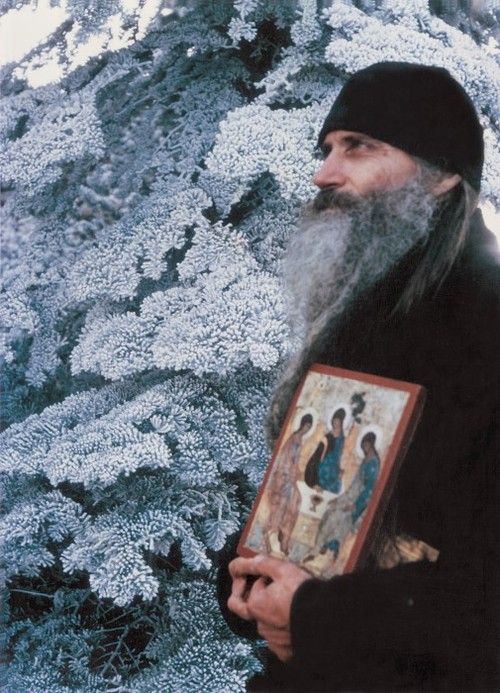
Father Seraphim Rose holding an icon of the Holy Trinityblessed seraphim.jpg

Orthodoxy means “true glory” or “true faith.”  We Orthodox think very highly of the word.  Or do we?  When it comes down to it, does Orthodoxy actually matter all that much to us (as it should)?  Orthodox Christians in the west find themselves living among many different Christianities and it can sometimes be tempting to think that notwithstanding some of the more obvious differences, (icons, the Theotokos, fasting, worship, for example), all these Christian traditions share much the same faith as us.  If you are of this opinion, then I am sorry to have to disappoint you, but it just isn’t true at all.  How so?

I am going to consider this issue by looking at a case study which reveals the damage that heresy can do in our personal lives, our relationships and even to the society and world that we live in.  It is a fictional story, but quite typical.

John and Mary go to an Evangelical Anglican Church.  John is Orthodox (Greek tradition).  Mary is Anglican.  This is her second marriage, being a young widow with one teenage son (Ian, 15) still living at home. She now has two children with John, daughters, aged 5 and 7.  John would prefer to go to his local Greek Church but his wife is a committed Anglican, and their children, although baptised in the Orthodox Church (with the exception of Ian), prefer the “lively worship songs”, as they put it, which are included in the church’s family service.  Ian is very involved in the local youth group and is thinking eventually of becoming an Anglican minister.  Does Orthodoxy then matter to John?  Well, yes, but only in a remote nostalgic sort of way.  It is some years now since he has attended Divine Liturgy, the last time was at Pascha in 2008.  His stepson, Ian, will have nothing to do with what he considers to be the “stuffy incomprehensible worship” at his stepdad’s church which he has visited once, just after his stepfather’s marriage.

Ten years later ….

Neither John nor Mary now regularly attend the Anglican Church.  John still hasn’t been back to the Orthodox Church since Pascha 2008 and Mary doesn’t like the new Vicar who is a woman.  Mary is quite a conservative evangelical believer who maintains that a woman should not be in a place of authority within the Church over men.  (This is the evangelical doctrine of the”headship of the male.”)  Her two daughters, now 15 and 17 still attend on their own and are very active in the youth group.  Ian, who shares his mother’s conservative outlook, has also left the church, disagreeing with what he believes to be the Anglican Church’s tolerance of homosexual partnerships.  He has started attending a very conservative Baptist church that teaches pure Calvinism, in particular, the doctrines known as TULIP (from the first letter of each doctrine), namely:-

Total Depravity – As a result of Adam’s fall, all humanity, is dead in sins and therefore damned.  Humanity’s nature is corrupt and utterly incapable of godliness.

Unconditional Election – Because man is dead in sin, he is unable to initiate a response to God; therefore, from eternity God elected certain people to salvation and others to damnation. Election and predestination are unconditional; they are not based on man’s response because man is unable to respond to God, nor does he want to.

Limited Atonement – Because God determined that certain people should be saved as a result of His unconditional election, He determined that Christ should die for the elect alone. All whom God has elected, and for whom Christ died, will be saved but the rest will be damned to hell for all eternity; again as determined by God’s sovereign will.

Irresistible Grace – Those whom God elected He draws to Himself through irresistible grace. God makes man willing to come to Him. When God calls, man responds.  Man cannot choose to love God by his own choice and freedom.

Perseverance of the Saints – The precise people God has elected and drawn to Himself through the Holy Spirit will persevere in faith to the end. None whom God has elected will ever be lost; they are eternally secure even though they may sin grievously after election.

Although Ian is a pious and committed believer these doctrines trouble him.  He begins to doubt that he is one of the elect, chosen by God for salvation.  His sinful life (he occasionally resorts to prostitutes) troubles him greatly but his church tells him that he is unable to make any right choice and save himself.  Ian enters a very dark period of depression, made much worse by the impact of these heresies on his mental health.  His fragile relationship with his atheist girlfriend disintegrates.  He seeks medical help for a latent depression which has now become the full blown clinical variety.

Five years further on, the two daughters are now at the same university, one just about to graduate but they have been unable to find an evangelical church they like nearby, so they have stopped attending church on the grounds that they believe in Christ and are saved, so what’s the point?  Back home John and Mary now lead thoroughly secular lives.  John sometimes thinks wistfully of his childhood back in Cyprus when he used to attend church with his Nana but this seems to him a very distant idealised time now.  He hopes, nonetheless, that his wife or children will respect his wish for an Orthodox funeral if he dies first.

So, did Orthodoxy matter to John?  Well yes, particularly earlier on, but for most of his adult life only in a nominal sort of way.  He had certainly not been catechised in his youth and his grasp of the faith, therefore, had always been somewhat tenuous.  Did Anglican evangelicalism then strike him as being similar to Orthodoxy?  Well yes, mostly.  He only saw differences in the worship style which often set his teeth on edge.  Let’s face it.  He attended the evangelical Anglican Church for the sake of his wife and family.  When they stopped going, so did he.  There is only one God after all and this was just a different way of being a Christian, it seemed to him.  He did lament his stepson’s involvement in the Calvinist church because he could see how its refusal of human freedom and choice, its dark doctrines of divine election to salvation or damnation, did not feel right to him, but he couldn’t really say why. 

Did Mary his wife ever consider Orthodoxy when the lady Vicar arrived?  Well, no, why should she?  Her husband rarely spoke of his childhood faith and she concluded that it could not have meant much to him in that case, so why should she consider it?  John and Mary now spend a conventional Sunday together as most couples do in their street, getting up late, going to the gym occasionally, shopping at B&Q, taking a drive into the countryside; just the usual and normal things everyone does nowadays.  Both still consider themselves as Christians, but obviously not of the fanatical sort whom they blame, quite rightly, for destroying Ian’s piece of mind.  As for the two girls, well they eventually graduated and now have families of their own.  Churchgoing, however, has become completely alien to all their families with the rest.

So, does Orthodox Christianity matter to you?
Does it matter enough for you to find out about it in more depth?
Does it matter enough for you to practice it as faithfully as you can, notwithstanding the distractions of modern life?
Does it matter enough for you to stay loyal to this faith no matter what challenges are presented to it by both family life and society as a whole?

And here’s the challenging question …

In the absence of an Orthodox church nearby would you be prepared to pray at home rather than pray with the heterodox?

Adam’s lament


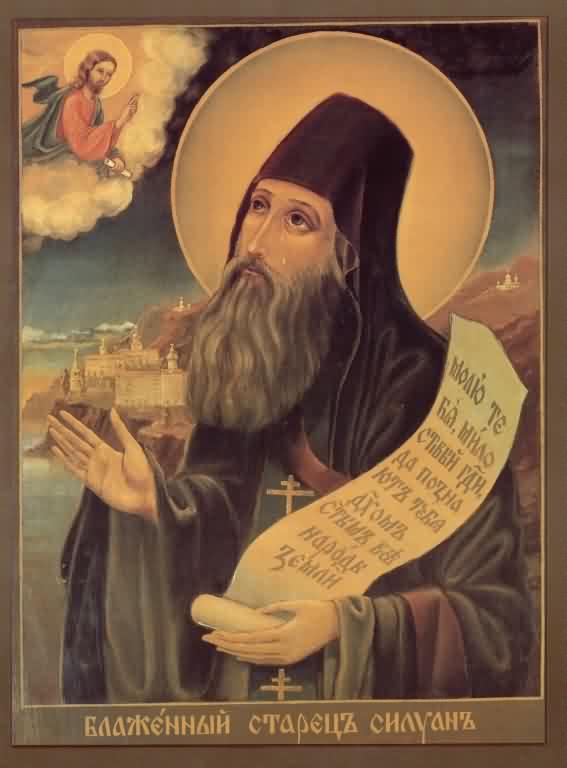
St. Silouan’s the Athonite poetry-prayer, Byzantine iconography, and Arvo Pärt’s lyrical musical/ choral  setting of the text  faithful to its every nuance.(*) 

lament1a

Lenten Reflections (III)

Adam, father of all mankind, in paradise knew the sweetness of the love of God; and so when for his sin he was driven forth from the garden of Eden, and was widowed of the love of God, he suffered grievously and lamented with a great moan. And the whole desert rang with his lamentations, for his soul was racked as he thought, ‘I have distressed my beloved   God’. He sorrowed less after paradise and the beauty thereof; for he sorrowed that he was bereft of the love of God, which insatiably, at every instant, draws the soul to Him.

In the same way the soul which has known God through the Holy Spirit, but has afterwards lost grace experiences the torment that Adam suffered. There is an aching and a deep regret in the soul that has grieved the beloved Lord.

Adam pined on earth, and wept bitterly, and the earth was not pleasing to him. He was heartsick for God, and this was his cry:

lament1b

My soul wearies for the Lord, and I seek Him in tears.

How should I not seek Him?

When I was with Him my soul was glad and at rest, and the enemy could not come nigh me;

But now the spirit of evil has gained power over me, harassing and oppressing my soul,

So that I weary for the Lord even unto death, And my spirit strains to God,

and there is naught on earth can make me glad, Nor can my soul take comfort in any thing,

but longs once more to see the Lord, that her hunger may be appeased.


lament1c

I cannot forget Him for a single moment, and my soul languishes after Him,

and from the multitude of my afflictions I lift up my voice and cry: ‘Have mercy upon me, O God. Have mercy on Thy fallen   creature.’

Thus did Adam lament, and the tears steamed down his face on to his beard, on to the ground beneath his feet, and the whole desert heard the sound of his moaning. The beasts and the birds were hushed in grief; while Adam wept because peace and love were lost to all men on account of his sin.


lament1d

Adam knew great grief when he was banished from paradise, but when he saw his son Abel slain by Cain his brother, Adam’s grief was even heavier. His soul was heavy, and he lamented and   thought:

Peoples and nations will descend from me, and multiply, and suffering will be their lot, and they will live in enmity and seek to slay one another.

And his sorrow stretched wide as the sea, and only the soul that has come to know the Lord and the magnitude of His love for us can understand.

I, too, have lost grace and call with Adam:

Be merciful unto me, O Lord! Bestow on me the spirit of humility and   love.


lament1e

O love of the Lord! He who has known Thee seeks Thee, tireless, day and night, crying with a loud voice:   “I pine for Thee, O Lord, and seek Thee in tears.

How should I not seek Thee?

Thou didst give me to know Thee by the Holy Spirit,

And in her knowing of God my soul is drawn to seek Thee in tears.” Adam wept:

The desert cannot pleasure me; nor the high mountains, nor meadow nor forest, nor the singing of birds.   I have no pleasure in any thing.


lament1f

My soul sorrows with a great sorrow: I have grieved God.

And were the Lord to set me down in paradise again,

There, too, would I sorrow and weep – ‘O why did I grieve my beloved   God?’


The soul of Adam fell sick when he was exiled from paradise, and many were the tears he shed in his distress. Likewise every soul that has known the Lord yearns for Him, and   cries:


Where art Thou, O Lord? Where art Thou, my Light? Why hast Thou hidden Thy face from me?

Long is it since my soul beheld Thee,

And she wearies after Thee and seeks Thee in tears. Where is my Lord?

Why is it that my soul sees Him not? What hinders Him from dwelling in me?


lament1g


This hinders Him: Christ-like humility and love for my enemies art not in me. God is love insaturable, love impossible to describe.

Adam walked the earth, weeping from his heart’s manifold ills, while the thoughts of his mind were on God; and   when his body grew faint, and he could no longer shed tears, still his spirit burned with longing for God, for he could not forget paradise and the beauty thereof; but even more was it the power of His love which caused the soul of Adam to reach out towards God.

I write of thee, O Adam: But thou art witness,

my feeble understanding cannot fathom thy longing after God,

Nor how thou didst carry the burden of repentance.

lament1h

O Adam, thou dost see how I, thy child, suffer here on earth. Small is the fire within me, and the flame of my love flickers low. O Adam, sing unto us the song of the Lord,

That my soul may rejoice in the Lord And be moved to praise and glorify Him

as the Cherubim and Seraphim praise Him in the heavens And all the hosts of heavenly angels

sing to Him the thrice-holy hymn.

O Adam, our father, sing unto us the Lord’s song, That the whole earth may hear

And all thy sons may lift their minds to God

and delight in the strains of the heavenly anthem, And forget their sorrows on earth.


lament1i


The Holy Spirit is love and sweetness for the soul, mind and body. And those who have come to know God by the   Holy Spirit stretch upward day and night, insatiable, to the living God, for the love of God is very sweet. But when the soul loses grace her tears flow as she seeks the Holy Spirit anew.

But the man who has not known God through the Holy Spirit cannot seek Him with tears, and his soul is ever harrowed by the passions; his mind is on earthly things. Contemplation is not for him, and he cannot come to know Jesus Christ. Jesus Christ is made known through the Holy Spirit.


Adam knew God in paradise, and after his fall sought Him in tears.

expulsion


O Adam, our father, tell us, thy sons, of the Lord. Thy soul didst know God on earth,

Knew paradise too, and the sweetness and gladness thereof,

And now thou livest in heaven and dost behold the glory of the Lord. Tell of how our Lord is glorified for His sufferings.

Speak to us of the songs that are sung in heaven, how sweet they are, For they are sung in the Holy Spirit.

Tell us of the glory of the Lord,

of His great mercy and how He loveth His creature. Tell us of the Most Holy Mother of God,

how she is magnified in the heavens, And the hymns that call her blessed.

Tell us how the Saints rejoice there, radiant with grace. Tell us how they love the Lord,

and in what humility they stand before God.

O Adam, comfort and cheer our troubled souls. Speak to us of the things thou dost behold in heaven. Why art thou silent?

Lo, the whole earth is in travail.

Art thou so filled with the love of God that thou canst not think of us? Or thou beholdest the Mother of God in glory,

and canst not tear thyself from the sight,

And wouldst not bestow a word of tenderness on us who sorrow, That we might forget the affliction there on earth?

O Adam, our father,

thou dost see the wretchedness of thy sons on earth.

Why then art thou silent?


And Adam speaks:

My children, leave me in peace.

I cannot wrench myself from the love of God to speak with you.

My soul is wounded with love of the Lord and rejoices in His beauty. How should I remember the earth?

Those who live before the Face of the Most High cannot think on earthly things.


O Adam, our father, thou hast forsaken us, thine orphans, though misery is our portion here on earth.

Tell us what we may do to be pleasing to God?

Look upon thy children scattered over the face of the earth, our minds scattered too.

Many have forgotten God.

They live in darkness and journey to the abysses of hell.


Trouble me not. I see the Mother of God in glory – How can I tear myself away to speak with you?

I see the holy Prophets and Apostles,

and all they are in the likeness of our Lord Jesus Christ, Son of God. I walk in the gardens of paradise,

and everywhere behold the glory of the Lord.

For the Lord is in me and hath made me like unto Himself.


O Adam, yet we are they children!

Tell us in our tribulation how we may inherit paradise, That we too, like thee, may behold the glory of the Lord. Our souls long for the Lord,

while thou dost live in heaven and rejoice in the glory of the Lord. We beseech thee – comfort us.

‘Adam’s Lament’ (2009) by Arvo Pärt

Why cry ye out to me, my children?

The Lord loveth you and hath given you commandments.

Be faithful to them, love one another, and ye shall find rest in God. Let not an hour pass without ye repent of your transgressions, That ye may be ready to meet the Lord.

The Lord said: ‘I love them that love me, and glorify them that glorify me.’


O Adam, pray for us, thy children.

Our souls are sad from many sorrows.

O Adam, our father, thou dwellest in heaven and dost behold the Lord seated in glory   On the right hand of God the Father.

Thou dost see the Cherubim and Seraphim and all the Saints And thou dost hear celestial songs

whose sweetness maketh thy soul forgetful of the earth.


But we here on earth are sad, and e weary greatly after God. There is little fire within us with which to love the Lord ardently. Inspire us, what must we do to gain paradise?


Adam makes answer:


Leave me in peace, my children, for from sweetness of the love of God I cannot think about the earth.


O Adam, our souls are weary, and we are heavy-laden with sorrow. Speak a word of comfort to us.

Sing to us from the songs thou hearest in heaven,

That the whole earth may hear and men forget their afflictions. O Adam, we are very sad.


Leave me in peace.

The time of my tribulation is past.

From the beauty of paradise and the sweetness of the Holy Spirit I can no longer be mindful of the earth.

But this I tell you:

The Lord loveth you, and do you live in love and be obedient to those in authority over you.

Humble your hearts, and the Spirit of God will live in you. He cometh softly into the soul and giveth her peace,

And bearth wordless witness to salvation. Sing to God in love and lowliness of Spirit, for the Lord rejoiceth therein.


O Adam, our father, what are we to do?   We sing but love and humility are not in us.


Repent before the Lord, and entreat of Him. He loveth man and will give all things.

I too repented deeply and sorrowed much that I had grieved God,


And that peace and love were lost on earth because of my sin. My tears ran down my face.

My breast was wet with my tears, and the earth under my feet; And the desert heard the sound of my moaning.

You cannot apprehend my sorrow,

nor how I lamented for God and for paradise. In paradise was I joyful and glad:

the Spirit of God rejoiced me, and suffering was a strange to me.

But when I was driven forth from paradise cold and hunger began to torment me;

The beasts and the birds that were gentle and had loved me turned into wild things

And were afraid and ran from me. Evil thoughts goaded me.

The sun and the wind scorched me. The rain fell on me.

I was plagued by sickness and all the afflictions of the earth. But I endured all things, trusting steadfastly in God.

Do ye, then, bear the travail of repentance.

Greet tribulation. Wear down your bodies. Humble yourselves And love your enemies,

That the Holy Spirit may take up His abode in you,

And then shall ye know and attain the kingdom of heaven. But come not night me:

Now from love of God

have I forgotten the earth and all that therein is. Forgotten even is the paradise I lost,

for I behold the glory of the Lord And the glory of the Saints

whom the light of God’s countenance maketh radiant as the Lord Himself.


O Adam, sing unto us a heavenly song,

That the whole earth may hearken

and delight in the peace of love towards God. We would hear those songs:

Sweet are they for they are sung in the Holy Spirit.


Adam lost the earthly paradise and sought it weeping. But the Lord through His love on the Cross gave Adam another paradise, fairer than the old – a paradise in heave where shines the Light of the Holy Trinity.


What shall we render unto the Lord for His love to us?

Source: St. Silouan the Athonite, by Archimandrite Sophrony.

(*) In an interview in Toronto in the 1980’s, Pärt shared his personal definition of minimalism as the process by which his music is reduced to the number One. In his view, that One is the Divine Creator. In Adam’s Lament (2009) he sees the Biblical Adam as a unifying symbol. Pärt said, “Our ancestor Adam foresaw the human tragedy that was to come and experienced it as his own guilty responsibility, the result of his sinful act. He suffered all the cataclysms of humanity into the depths of depression, inconsolable in his agony.” Adam’s Lament is based on a Russian text by the ascetic monk and poet, St. Silouan of Athos (1866–1938). Pärt’s fascination with Silouan is such that his setting of this text is faithful to its every nuance. The music reflects a range of devotional writing that’s by turns dramatic, passionate, humble and submissive.

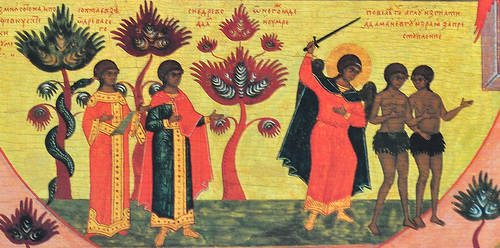
Garments of Skin

Detail from North Door of Iconostasis

Forgiveness Sunday in Icon and Prayer

Lenten Reflections (II)

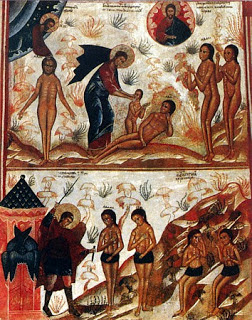
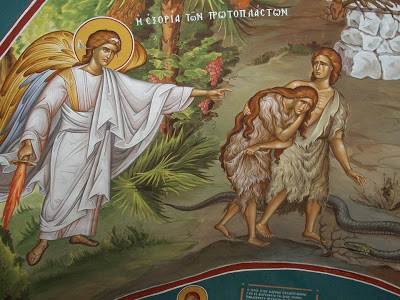
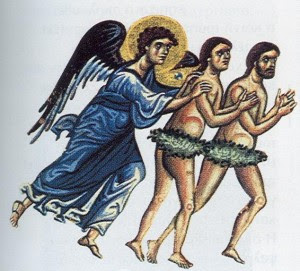
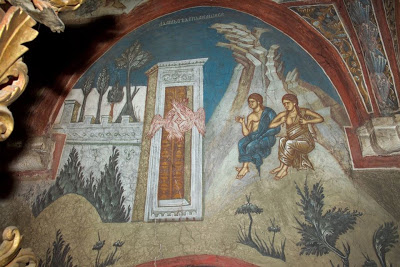
A composition of Icons and portions of Saturday vespers and the Sunday hymns on the theme of Forgiveness Sunday: The Expulsion of Adam and Eve from Paradise

From Saturday Vespers:

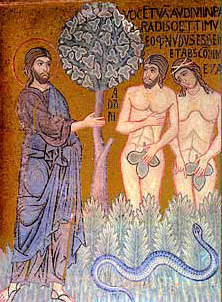
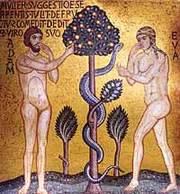
The Creation of Adam (Monreale)

The Lord, my Creator, took me as dust from the earth, and with the breath of life He gave me a soul and made me a living creature.

He honoured me as ruler on earth over all things visible and as a companion of the Angels.

But Satan the deceiver, using the serpent as his instrument, enticed me by food, separated me from the glory of God and gave me over to the earth and to the lowest depths of death. But as Master and compassionate, call me back again.

+++

Adam and Eve Hide from God

Wretch that I am, I have cast off the robe woven by God, disobeying Your divine command, Lord, at the counsel of the enemy, and I am clothed now in fig leaves and in garments of skin.

I am condemned to eat the bread of toil in the sweat of my brow, and the earth has been cursed so that it bears thorns and thistles for me.

But, Lord, who in the last times were made flesh of a Virgin, call me back and bring me into Paradise again.

+++

From Sunday of Forgiveness service:

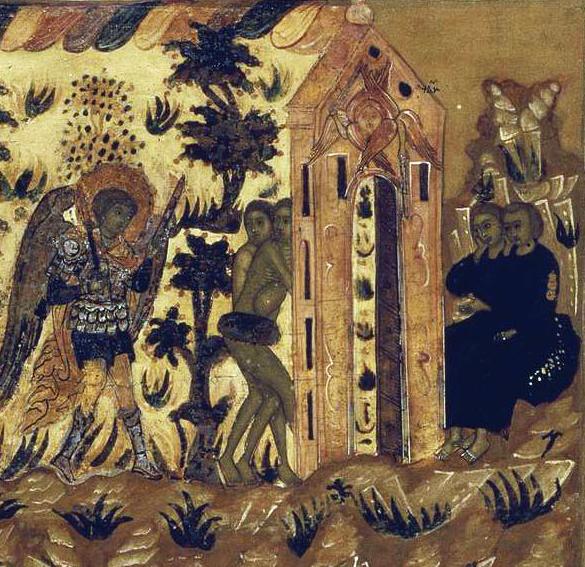
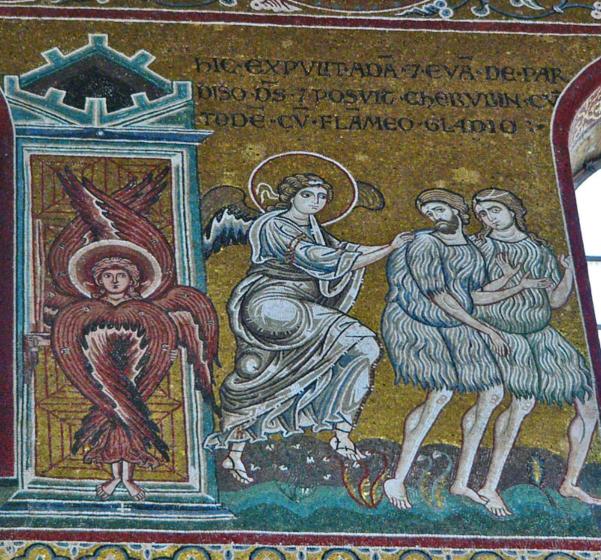
Expulsion and Lamenting

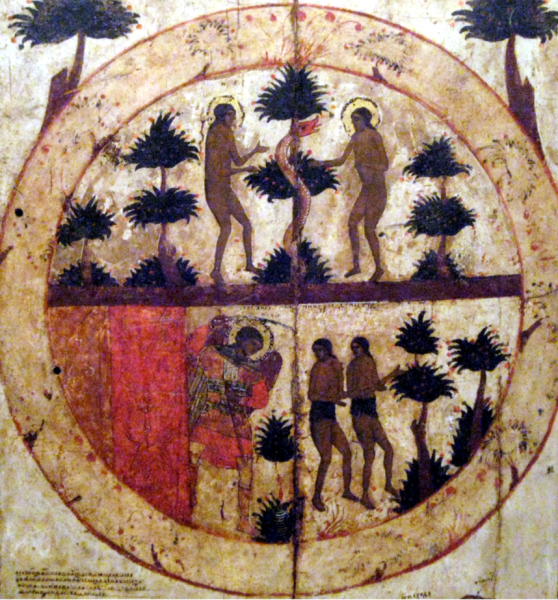
Adam sat opposite Paradise and, lamenting his nakedness, he wept:
‘Woe is me ! By evil deceit was I persuaded and robbed, and exiled far from glory. Woe is me ! Once naked in my simplicity, now I am in want. But, Paradise, no longer shall I enjoy your delight; no more shall I look upon the Lord my God and Maker, for I shall return to the earth whence I was taken.Merciful and compassionate Lord, I cry to you, ‘Have mercy on me who am fallen’.

+++

Adam and Eve Lamenting

Through eating Adam was cast out of Paradise. And so, as he sat in front of it, he wept, lamenting with a pitiful voice and saying, ‘Woe is me, what have I suffered, wretch that I am! I transgressed one commandment of the Master, and now I am deprived of every good thing. Most holy Paradise, planted because of me and shut because of Eve, pray to him who made you and fashioned me, that once more I be filled with your flowers.’

Then the Saviour said to him, ‘I do not want the creature which I fashioned to perish, but to be saved and come to knowledge of the truth, because the one who comes to me I will in no way cast out.’

+++

Fall and Exile

ʺWoe is me!ʺ cried Adam in lament, “that a serpent and a woman have deprived me of intimate communion with God; and eating from the tree has estranged me from the Paradise of delight. Woe is me, for I cannot bear the disgrace! Once the king of all God’s creatures on the earth, I am now viewed as a hostage because of one piece of illicit advice; and though once vested with the glory of immortality, I, as mortal, carry about the skin of deadness lamentably. Woe is me! Which lamentation shall I enlist to collaborate with me? But You, Friend of man, who fashioned me from the earth, and who donned compassion; recall me from servitude to the enemy and save me.”

Return to Paradise

The stadium of virtue is now open; those who wish to compete, enter therein, girded for the good contest of Lent, for those who compete according to the rules shall receive their laurels rightfully. Taking up the full armor of the Cross, let us do battle against the Enemy. As an impregnable wall, we have the Faith, prayer as our breastplate, and acts of mercy as our helmet. Instead of sword, there is fasting, which cuts every evil from the heart. He who does this shall attain a true crown from Christ, the King of all, on Judgment Day.

(Idiomela of the Praises)

+++

Paradise; Abraham's Bosom

O precious Paradise, unsurpassed beauty, tabernacle built by God, unending gladness and delight, glory of the just, joy of prophets, and dwelling place of saints, with the sound of your leaves implore to the Maker of all to open for me the gates which I closed by my transgression, and may count me worthy to partake of the Tree of Life, and of the joy in which I delighted when I dwelt in you before Adam was banished from Paradise through disobedience and cast out from delight, beguiled by the words of a woman.

(from Saturday Vespers)

+++

The Expulsion from Paradise (Genesis 3)

Saturday Stichera for Forgiveness Sunday (pdf)

Selected Hymns for Forgiveness Sunday

Sermon on Forgiveness Sunday

Rid yourself of ALL bitterness

poison

Resentment is like taking poison and waiting for the other person to die. Malachy McCourt

*

No podvig [ascetic undertaking], no almsgiving can atone for the refusal to forgive.

Resentment and Forgiveness

Lenten Reflections (I)

by Hieromonk Damascene

1. The Misuse of the Incensive Power

Since we are approaching Forgiveness Sunday, I’ve chosen, with the blessing of His Grace Bishop Longin, to speak on the subject of Anger, Judgment, and Resentment, and on their cure: Forgiveness and Reconciliation. First I will speak about the problem and then I’ll discuss the solution.

Anger, judgment, remembrance of wrongs, grudges, resentment: these are passions with which all of us struggle in one way or another. Why are we prone to them? According to the Holy Fathers of the Church, the power that causes anger was part of man’s original nature, which was created “good” by God (cf. Genesis 1:31). The Fathers say that man’s soul was originally created with three powers: the intellective or “knowing” power, the appetitive or “desiring” power, and the incensive or “fervent” power. Man was supposed to use his intellective power to know God, his appetitive power to yearn for God, and his incensive power to courageously repel temptation—beginning with the temptation of the serpent in the Garden.

Instead of using their incensive power to repel temptation, however, Adam and Eve succumbed to their first temptation: they ate of the forbidden fruit. According to the Holy Fathers, the essence of the serpent’s temptation lies in these words: “Eat of this fruit and you shall be as gods” (cf. Genesis 3:5). St. John Chrysostom says that Adam “expected to become himself a god, and conceived thoughts above his proper dignity.” This is a key point which we’ll keep coming back to.

“No podvig [ascetic undertaking], no almsgiving can atone for the refusal to forgive.”

When the primordial Fall occurred, man’s original nature, created in the image of God, became corrupted. He acquired what the Holy Fathers call a fallen nature. He still had the image of God in him, but the image was tarnished: “buried,” as it were, under the corruption of his nature. Now he had an inclination toward sin, born of his desire to be God without God’s blessing. All of us share that fallen nature; there is a part of each one of us that wants to be God. In popular modern terms, that part of us is called the “ego.”

When man fell, the three powers of his soul became subject to corruption, along with his body, which became subject to death and decay. Now man used his intellective power to puff up with knowledge and be superior to others; now he used his appetitive power to lust after other people, after the things of this world, after sinful pleasures, wealth, and power; and he used his incensive power, not against temptation, but against other people, against things, and sometimes against life and God Himself. The incensive power expressed itself as sinful anger and wrath. The first man born of woman, Cain, got so angry and jealous that he murdered his own brother, Abel.

So, here we are, all members of the family of Adam and Eve, possessing a fallen nature that wants to be God, and a corrupted incensive power that gets angry at the wrong things.

Very clear teachings on anger and the incensive power can be found in the first volume of The Philokalia, in the teachings of St. John Cassian, a Holy Father of the fifth century. According to St. John Cassian, all anger directed at other people—all such wrong use of our incensive power—blinds the soul. He writes: “We must, with God’s help, eradicate the deadly poison of anger from the depths of our souls. So long as the demon of anger dwells in our hearts … we can neither discriminate what is good, nor achieve spiritual knowledge, nor fulfill our good intentions, nor participate in true life…. Nor will we share in divine wisdom even though we are deemed wise by all men, for it is written: Anger lodges in the bosom of fools (Eccles. 7:9). Nor can we discriminate in decisions affecting our salvation even though we are thought by our fellow men to have good sense, for it is written: Anger destroys even men of good sense (Proverbs 15:1). Nor will we be able to keep our lives in righteousness with a watchful heart, for it is written: Man’s anger does not bring about the righteousness of God (James 1:20)….

“If, therefore, you desire to attain perfection and rightly pursue the spiritual way, you should make yourself a stranger to all sinful anger and wrath. Listen to what St. Paul enjoins: Rid yourselves of all bitterness, wrath, anger, clamor, evil speaking, and all malice (Eph. 4:31). By saying ‘all’ he leaves no excuse for regarding any anger as necessary or reasonable. If you want to correct your brother when he is doing wrong or punish him, you must try to keep yourself calm; otherwise you yourself may catch the sickness you are seeking to cure and you may find that the words of the Gospel now apply to you: Physician, heal yourself (Luke 4:23), or Why do you look at the speck of dust in your brother’s eye, and not notice the beam in your own eye?(Matt. 7:3).

“No matter what provokes it, anger blinds the soul’s eyes, preventing it from seeing the Sun of righteousness…. Whether reasonable or unreasonable, anger obstructs our spiritual vision. Our incensive power can be used in a way that is according to nature only when turned against our own impassioned or self-indulgent thoughts. [2]

Here St. John Cassian is telling us that, when we use our incensive power against temptation—against impassioned or self-indulgent thoughts—we are using this power as it was originally intended to be used, according to our original, virtuous nature, created in the image of God. However, when we use our incensive power against anything else—especially against other people—we are misusing it, according to our fallen nature.

*

Καλή Σαρακοστή!

Lent – A Time For Forgiveness 

*

The Rite of Forgiveness

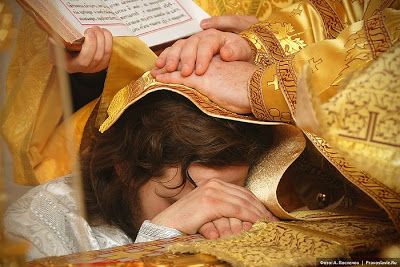
After the dismissal at Vespers, the priest stands beside the analogion, or before the ambon, and the faithful come up one by one and venerate the icon, after which each makes a prostration before the priest, saying, “Forgive me, a sinner.” The priest also makes a prostration before each, saying, “God forgives. Forgive me.” The person responds, “God forgives,” and receives a blessing from the priest. Meanwhile the choir sings quietly the irmoi of the Paschal Canon, or else the Paschal Stichera. After receiving the priest’s blessing, the faithful also ask forgiveness of each other.


Return From Exile

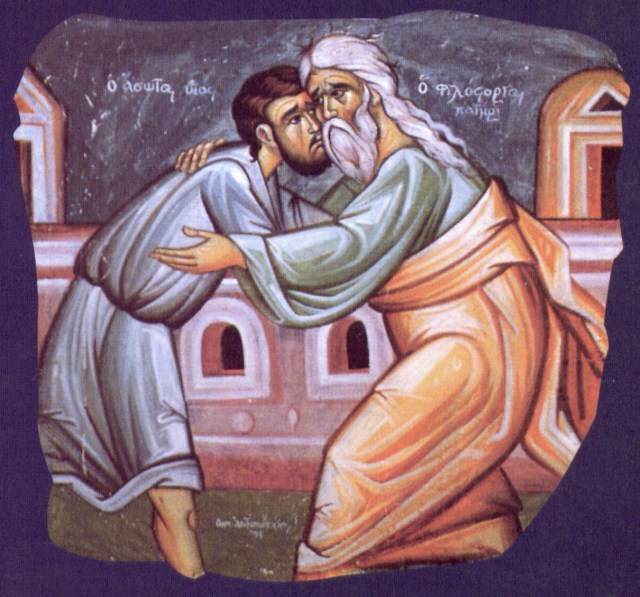
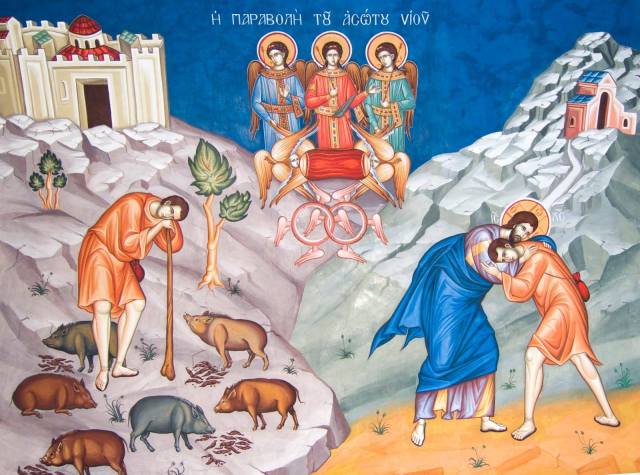
prodigal-son.jpg

Kontakion of the Prodigal Son, Tone 3

I have recklessly forgotten Thy glory, O Father; and among sinners I have scattered the riches which Thou gavest me. Therefore I cry to Thee like the Prodigal: “I have sinned before Thee, O compassionate Father; receive me, a penitent, and make me as one of Thy hired servants.”

Luke 15:11-32

The Parable of the Prodigal Son

From the Explanation of the Gospel of St. Luke by Blessed Theophylact, 

Archbishop of Ochrid and Bulgaria

11-16. And He said, A certain man had two sons: and the younger of them said to his father, Father, give me the portion of the property that falleth to me. And he divided unto them his living. And not many days after the younger son gathered all together, and took his journey into a far country, and there squandered his property with prodigal living. And when he had spent all, there arose a mighty famine in that land; and he began to be in want. And he went and joined himself to a citizen of that country; and he sent him into his fields to feed swine. And he longed to fill his belly with the pods that the swine did eat: and no man gave unto him. This parable is like those which precede it. For it also presents a man, Who is in fact God, the Lover of man. The two sons represent the two kinds of men, righteous and sinners. The younger son said, Give me the portion of the property that falleth to me. Of old, from the beginning, righteousness belonged to human nature, which is why the older son (born at the beginning) does not become estranged from the father. But sin is an evil thing which was born later. This is why it is the younger son who alienates himself from the father, for the latter-born son grew up together with sin which had insinuated itself into man at a later time. The sinner is also called the younger son because the sinner is an innovator, a revolutionary, and a rebel, who defies his Father’s will.

Father, give me the portion of the property (ousia) that falleth to me. The essential property of man is his rational mind, his logos, always accompanied by his free will (autexousia), for all that is rational is inherently self-governing. The Lord gives us logos for us to use, according to our free will, as our own essential property. He gives to all alike, so that all alike are rational, and all alike are self-governing.3 But some of us use this generous gift rationally, in accordance with logos, while others of us squander the divine gift. Moreover, everything which the Lord has given us might be called our property, that is, the sky, the earth, the whole creation, the law and the prophets. But the later sinful generation, the younger son, saw the sky and made it a god, and saw the earth and worshipped it, and did not want to walk in the way of God’s law, and did evil to the prophets. On the other hand, the elder son, the righteous, used all these things for the glory of God. Therefore, having given all an equal share of logos and self-determination, God permits us to make our way according to our own will and compels no one to serve Him who is unwilling. If He had wanted to compel us, He would not have created us with logos and a free will. But the younger son completely spent this inheritance. Why? Because he had gone into a far country. When a man rebels against God and places himself far away from the fear of God, then he squanders all the divine gifts. But when we are near to God, we do not do such deeds that merit our destruction. As it is written, I beheld the Lord ever before me, for He is at my right hand, that I might not be shaken (Ps. 15:8). But when we are far from God and become rebellious, we both do, and suffer, the worst things, as it is written, Behold, they that remove themselves from Thee shall perish (Ps. 72:25).

The younger son indeed squandered and scattered his property. For every virtue is a simple and single entity, while its opposing vice is a many-branched complexity, creating numerous deceptions and errors. For example, the definition of bravery is simple, that is, when, how, and against whom, one ought to make use of one’s capacity to be stirred to action. But the vice of not being brave takes two forms, cowardice and recklessness. Do you see how logos can be scattered in every direction and the unity of virtue destroyed? When this essential property has been spent, and a man no longer walks in accordance with logos, by which I mean the natural law, nor proceeds according to the written law, nor listens to the prophets, then there arises a mighty famine—not a famine of bread, but a famine of hearing the word (logos) of the Lord (Amos 8:11). And he begins to be in want, because by not fearing the Lord he has departed far from Him. But there is no want to them that fear the Lord (Ps. 33:9). How is there no want to them that fear Him? Because blessed is the man that feareth the Lord; in His commandments shall he greatly delight. Therefore glory and riches shall be in his house, and far from being himself in want, he hath dispersed, he hath given to the poor (see Ps. 111). Therefore the man who makes a journey far from God, not keeping God’s dread face ever before his eyes, indeed is in want, having no divine logos at work in him.

And he went, that is, he proceeded and advanced in wickedness, and joined himself to a citizen of that country. He who is joined to the Lord becomes one Spirit with Him. But he who is joined to a harlot, that is, to the nature of the demons, becomes one body with her (I Cor. 6:16) and he makes himself all flesh, having no room in himself for the Spirit, as it was for those men at the time of the flood (Gen. 6:4). The citizens of that country far from God are none other than the demons. The man who joins himself to these citizens, having advanced and become powerful in wickedness, feeds the swine, that is, he teaches others evil and filthy deeds. For all those who take pleasure in the muck of shameful deeds and carnal passions are like swine. Pigs are never able to look upward because of the peculiar shape of their eyes. This is why, when a farmer grabs hold of a pig, he is not able to make it stop squealing until he turns it upside down on its back. This quiets the pig, as if, by looking upward, the pig can see things it had never seen before, and it is startled into silence. Such are they whose eyes are ever turned to filthy things, who never look upward. Therefore, a man who exceeds many others in wickedness can be said to feed swine. Such are the keepers of brothels, the captains of brigands, and the chief among publicans. All these may be said to feed swine. This wretched man desires to satisfy his sin and no one can give him this satisfaction. For he who is habitual in sinful passions receives no satisfaction from them. The pleasure does not endure, but is there one moment and gone the next, and the wretched man is again left empty. Sin is likened to the pods which the swine eat, because, like them, sin is sweet in taste yet rough and harsh in texture, giving momentary pleasure but causing ceaseless torments. Therefore, there is no man to provide satisfaction for him who takes pleasure in these wicked passions. Who can both satisfy him and quiet him? Cannot God? But God is not present, for the man who eats these things has traveled a far distance from God. Can the demons? They cannot, for they strive to accomplish just the opposite, namely, that wickedness never end or be satisfied.

17-21. And when he came to himself, he said, How many hired servants of my father’s have bread enough and to spare, and I perish with hunger! I will arise and go to my father, and will say unto him, Father, I have sinned against heaven, and before thee, and am no longer worthy to be called thy son: make me as one of thy hired servants. And he arose, and came to his father. But when he was yet a great way off, his father saw him, and had compassion, and ran, and fell on his neck, and kissed him. And the son said unto him, Father, I have sinned against heaven, and in thy sight, and am no longer worthy to be called thy son. The man who until now had been prodigal came to himself. This is because he was “outside himself” and had taken leave of his true self so long as he committed foul deeds. Rightly is it said that he wasted and spent his essential property. This is why he was outside himself. For he who is not governed by logos, but lives irrationally without logos, and teaches others to do the same, is outside of himself and has abandoned his reason, which is his very essence. But when a man regains his logos (analogizetai) so as to see who he is and into what a state of wretchedness he has fallen, then he becomes himself again, and using his reason, he comes to repent and returns from his wanderings outside reason. He says hired servants, signifying the catechumens, who have not yet become sons because they have not yet been illumined by Holy Baptism. Indeed the catechumens have an abundance of the rational bread, the sustenance of the Word (Logos), because they hear each day the readings of Scripture.

Listen, so that you may learn the difference between a hired servant and a son. There are three ranks of those who are being saved. The first kind are like slaves who do what is good because they fear the judgment. This is what David means when he says, Nail down my flesh with the fear of Thee, for of Thy judgments am I afraid (Ps. 118:120). The second kind, who are like hired servants, are those who are eager to serve God because of their desire for the reward of good things, as David again says, I have inclined my heart to perform Thy statutes for ever for a recompense (Ps. 118:112). But if they are of the third kind, that is, if they are sons, they keep His commandments out of love for God. This is what David means when he says, 0 how I have loved Thy law, 0 Lord! The whole day long it is my meditation (Ps. 118:97); and again, with no mention of fear, I lifted up my hands to Thy commandments which I have loved (Ps. 118:48), and again, Wonderful are Thy testimonies, and because they are wonderful, therefore hath my soul searched them out (Ps. 118:129). One must understand the hired servants to refer not only to the catechumens, but also to all those in the Church who obey God out of some lesser motive than love. Therefore when a man is among the ranks of those who are sons, and then is disowned because of his sin, and sees others enjoying the divine gifts, and communing of the Divine Mysteries and of the Divine Bread, such a man ought indeed to apply to himself these piteous words, How many hired servants of my father’s have bread enough and to spare, and I perish with hunger! I will arise, arise, that is, from my fall into sin, and go to my Father, and will say unto him, Father, I have sinned against heaven, and before Thee. When I abandoned heavenly things, I sinned against heaven, preferring shameful pleasure to heavenly things, and choosing the land of hunger instead of my true fatherland, heaven. Just as we have a saying that the man who prefers lead to gold sins against the gold, so too the man who prefers earthly things to heaven, sins against heaven. Indeed he has gone astray from the road that leads to heaven. Understand that when he sinned, he behaved as if he were not acting in the sight of God, that is, in the presence of God; but once he confesses his sin, then he realizes that he has sinned in the sight of God.

And he arose, and came to his father, for we must not only desire the things that are dear to God but must get up and do them as well. You see the warm repentance—behold now the compassion of the father. He did not wait for his son to come to him, but he went and met him on the way and embraced him. God is called Father on account of His goodness and kindness, even though by nature He is God Who encompasses all things so that He could have restricted a man within His embrace, no matter which way the man might try to turn. As the prophet says, The glory of God shall compass thee (Is. 58:8). Before, when the son distanced himself, it was fitting that God, as Father, release him from His embrace. But when the son drew near through prayer and repentance, it was fitting that God again enclose him within His embrace. Therefore the Father falls on the neck of the one who before had rebelled and who now shows that he has become obedient. And the Father kisses him, as a sign of reconciliation, and by this kiss He first makes holy the defiled one’s mouth, which is as it were the doorway to the whole man, and through this doorway He sends sanctification into the innermost being.

confession

22-24. But the father said to his servants, Bring forth the first robe, and put it on him; and put a ring on his hand, and shoes on his feet: and bring hither the grain-fed bullock, and kill it; and let us eat, and be merry: for this my son was dead, and is alive again; he was lost, and is found. And they began to be merry. The servants you may understand to mean the angels, the ministering spirits who are sent to serve those who are counted worthy of salvation. For the angels clothe the man who has turned from wickedness with the first robe, that is, with the original garment which we wore before we sinned, the garment of incorruption; or, it means that garment which is honored above all others, the robe of Baptism. For the baptismal robe is the first to be placed around me, and from it I receive a covering of my former shame and indecency. Therefore you may understand the servants to mean the angels who carry out all those things that are done on our behalf, and by means of which we are sanctified. You may also understand the servants to mean the priests. For they clothe the repentant sinner with Baptism and the word of teaching, placing around him the first robe, which is Christ Himself (for all we that have been baptized into Christ have put on Christ, Gal. 3:18). And they put a ring on his hand, which ring is the seal of Christ given at Chrismation so that we might execute good deeds in His name. The hand is a symbol of action, and the ring is a symbol of a seal. Therefore he who has been baptized, and, in general, everyone who has turned from wickedness, ought to have on his hand, that is, on his entire faculty of action, the seal and the mark of Christ, which is placed on him to show that he has been made new in the image of his Creator. You may also understand the ring to signify the earnest of the Spirit (II Cor. 1:21-22). By that I mean that God will give us perfect and complete good things when it is time for them; but for now He gives us gifts as earnest, that is, as tokens of assurance of those good things to come. For example, to some He gives the power to work miracles, to others the gift of teaching, and to others still other gifts; having received these gifts, we have more confident hope in the perfect and complete good things to come. 

And shoes are put on his feet to protect him from scorpions, that is, from the seemingly small and hidden sins described by David (Ps. 18:12), which are in fact deadly. And these shoes also protect him from serpents, that is, from those sins which can be seen by all. And, in another sense, shoes are given to him who has been counted worthy of the first robe: God makes such a man ready to preach the Gospel and to bring benefit to others. This is Christianity—to benefit one’s neighbor. We are not ignorant of what is meant by the grain-fed bullock (ton moschon ton siteuton) which is slain and eaten. It is none other than the very Son of God, Who as a Man took flesh which is irrational and animal by nature, although He filled it with His own glory. Thus Christ is symbolized by the bullock, the Youngling which has never been put under the yoke of the law of sin; and He is grain-fed in the sense that Christ was set apart and prepared for this mystery from before the foundation of the world. And though it may seem somewhat difficult to take in, nevertheless it shall be said: the Bread which we break in the Eucharist appears to our eyes to be made of wheat (sitos) and thus may be called of wheat (siteutos); but in reality it is Flesh, and thus may be called the Bullock. For Christ Himself is both Bullock and Wheat. Therefore every one who is baptized and becomes a son of God, or rather, is restored to the status of son, and in general, every one who is cleansed from sin, communes of this Bullock of Wheat. Then he becomes the cause of gladness to the Father, and also to His servants, namely, the angels and the priests, because he who was dead is alive again, and he who was lost is found. For whoever is dead from the abundance of his wickedness is without hope; but whoever is able, with his changeable human nature, to change from wickedness to virtue, is said to be merely lost. To be lost is less severe than to be dead.

repentance.jpg

25-32. Now his elder son was in the field: and as he came and drew nigh to the house, he heard music and dancing. And he called one of the servants, and asked what these things meant. And he said unto him, Thy brother is come; and thy father hath killed the grain-fed bullock, because he hath received him safe and sound. And he was angry, and would not go in: therefore came his father out, and entreated him. And he answering said to his father, Lo, these many years do I serve thee, neither transgressed I at any time thy commandment: and yet thou never gayest me a kid, that I might make merry with my friends: but as soon as this thy son was come, who hath devoured thy living with harlots, thou hast killed for him the grain-fed bullock. And he said unto him, Son, thou art ever with me, and all that I have is thine. It was meet that we should make merry, and be glad: for this thy brother was dead, and is alive again; and was lost, and is found. Here is the celebrated question—how is it that the son who lived a God-pleasing life in all other respects, and who faithfully served his father, could display such envy? The question will be answered if one considers the reason why this parable was told. This parable and the ones preceding it were told because the Pharisees, who considered themselves pure and righteous, were grumbling at the Lord because He received harlots and publicans. The Pharisees murmured indignantly, believing themselves to be more righteous than the publicans, which is why the Lord presented this parable. Consider that the figure of the son who is seen to grumble is understood to refer to all those who are scandalized at the sudden good fortune and deliverance of sinners. Such men grumble, not because of envy, but because neither they nor we can understand the outpouring of God’s compassion for man. Does not David bring forward the figure of a man scandalized at the peace of sinners (Ps. 72:3)? And Jeremiah likewise, when he says, Why is it that the way of ungodly men prosper? Thou hast planted them, and they have taken root (Jer. 12:1-2). Such thoughts reflect man’s weak and poor understanding, which easily ignites with annoyance and questions the good fortune of the wicked, which seems undeserved.

In this parable, therefore, the Lord is saying to the Pharisees words like these: “Let us suppose that you are as righteous as that elder son and well-pleasing to the Father; I entreat you who are righteous and pure not to grumble, as this elder son did, against the gladness which we are showing over the salvation of the sinner, who is also a son.” Do you see that this parable is not about envy? Instead, by means of this parable, the Lord is instructing the minds of the Pharisees, so that they will not be vexed that the Lord receives sinners, even though they themselves are righteous and have fulfilled every commandment of God. It is no wonder that we too become vexed at those who appear undeserving. God’s compassion is so great, and He gives to us so abundantly of His own good things, that we may even grumble at His generosity. That criticism follows generosity is a fact to which we refer in everyday speech. If we do good to someone who fails to thank us, we often say to him, “Everyone says I am a fool for having been so good to you.” We use this expression, even if no one has actually criticized us, because extreme generosity is so often followed by criticism that to suggest the latter is to prove the former. But let us turn to the particulars of the parable, in brief.

The elder son was in the field, that is, in this world, working his own land, meaning his flesh, so that he might have his fill of bread, sowing with tears so that he might reap with rejoicing. When he learned what was being done, he did not want to enter into the common joy. But the compassionate father goes out and begs him to come in, and explains to him the reason for the joy, that a man who was dead has come back to life. Because as a man he did not understand, and because he was scandalized, the elder son accused the father of not giving him even a young goat, while for the prodigal son he slaughtered the fatted calf. What does the kid, the young goat, signify? You may learn here. Every young goat is considered to be of the portion of sinners who are placed on the left side. The righteous son is saying, then, “I have passed my life in toil and labor, I have been persecuted, suffered hardships, been oppressed by sinners, and on my behalf you have never slaughtered and killed a kid, that is, a sinner who afflicts me, so that I might have some small measure of rest.” For example, King Ahab was just such a goat to the Prophet Elijah. Ahab persecuted Elijah, but the Lord did not quickly give this goat over to the slaughter so that Elijah could have some small rest, and take his ease with his friends, the prophets. Therefore Elijah complained to God, Lord, they have digged down Thine altars, and have slain Thy prophets (III Kings 19:10) And Saul was a goat to David, as were also all those who slandered David. But the Lord allowed them to tempt him, and did not slay them to give David some rest. Therefore David said, How long shall sinners, 0 Lord, how long shall sinners boast (Ps. 93:3)? The elder son in the parable is saying these things: “You did not count me worthy of any consolation in all my toils; you never handed over to me for slaughter any of these who were afflicting me. But now you save the prodigal son who never had to toil.”

This is the entire purpose of the parable—to correct the Pharisees who were grumbling that He had accepted sinners. The parable also instructs us that no matter how righteous we may be, we ought not to rebuff sinners, nor to grumble when God accepts them. The younger son, therefore, represents the harlots and the publicans; the elder son represents those Pharisees and scribes who consider themselves righteous. It is as if God were saying, “Let us suppose that you are indeed righteous and have not transgressed any commandments; if some others have turned away from wickedness, why do you not accept them as your brothers and fellow laborers?” I am not unaware that some have interpreted the elder son to signify the angels, and the younger son, the latter-born nature of men which rebelled against the commandment it was given and went astray. Still others have said that the two sons represent the Israelites and the Gentiles who later believed. But the simple truth is this: the person of the elder son signifies the righteous, and the person of the younger son signifies sinners who have repented and returned. The entirety of the parable is given for the sake of the Pharisees, to teach them not to be vexed that sinners are received, even if they themselves are righteous. Let no one be vexed at the judgments of God—let him be patient with those apparent sinners who prosper, and are saved. How do you know whether a man whom you think is a sinner has not repented, and on this account has been accepted? Or that he has secret virtues on account of which God looks favorably upon him?


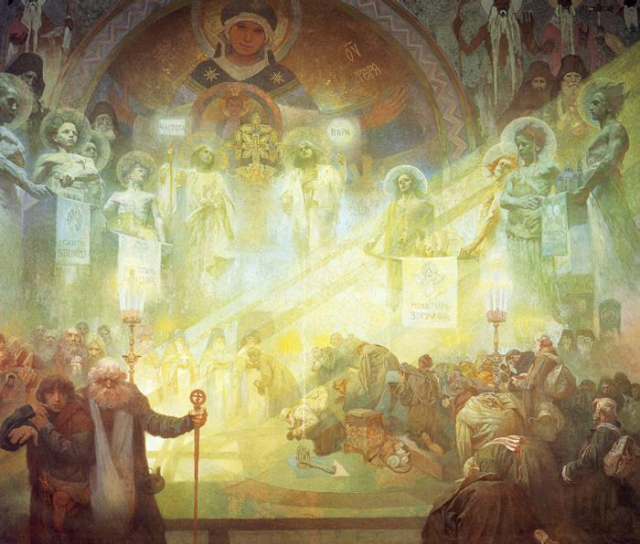
Mount Athos and Russia 1016 – 2016 
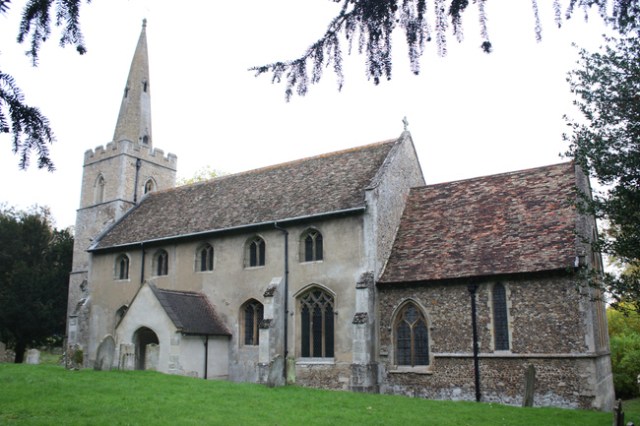
🚂 Traveling to Madingley, Cambridge

madingley

St Mary Magdalene Church, at Madingley

madingley4madingley3

Absolutely Stunning!

madingley2madingley5madingley7madingley6

For the  Eighth Madingley Conference

st-silouan

A Symposium Celebrating 1000 Years  of  Russian Monastic Presence on Mount Athos 

mount1mad1.png

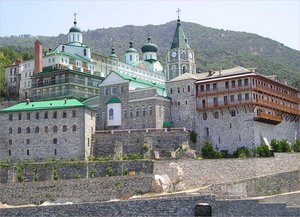
St. Panteleimon Monastery in Holy Mount Athos

3 – 5 February, 2017

The theme of  the 2017 residential conference will be Mount Athos and Russia, complementing the celebrations of 1000 years of Russian monastic presence on the Holy Mountain that have been taking place during the course of this summer. The first mention of a Russian monastery on the Holy Mountain was in 1016, and a series of events have occurred already this year to mark this millennium.

mount2

As the Chairman, Dr Graham Speake, has written: “Some of the most celebrated names in the history of Russian spirituality have been Athonites. Russians have contributed generously to the spiritual and cultural traditions of the Holy Mountain, just as Greek Athonites continue to have a significant impact on the spiritual life of the Russian Orthodox Church”.

The conference will bring together a distinguished group of speakers from Russia, the Ukraine, Finland and the United Kingdom, to explore various aspects of the Russian associations with Mount Athos.

A historical perspective will be provided by Sergey Viktorovich Shumilo, from the Ukraine. He will talk about the early Russian presence on the Holy Mountain, and the life of St Anthony, founder (with Saint Theodosius ) of the Caves of Kiev.

Hieromonk Irinei (Pikovskiy) , from the Sretensky Monastery in Moscow will examine how recent Athonite elders have influenced contemporary spiritual life in Russia, and inspired a renewal of Russian pilgrimage to the Holy Mountain.

Professor Rene Gothoni, from the University of Helsinki, will look at the history of Russian pilgrimage to Athos since the 12th century, and Archpriest Professor Andrew Louth will talk about the way in which the short 19th century Russian story, “The Way of a Pilgrim” was influential in promoting the use of the Jesus prayer, and the reading of the Philokalia.

The President, Metropolitan Kallistos Ware, will open the Conference by looking at the life of Saint Nil Sorsky, who spent time on Athos in the 15th century before returning to Russia to revive monastic life in the Athonite tradition. Hieromonk Nikolai (Sakharov) will concentrate on the 20th century Russian Saint Silouan, and his disciple and biographer, Father Sophrony. Dr Nicholas Fennell will consider the influence of Archimandrite Misail (Abbot of the Holy Monastery of Saint Panteleimon from 1905 to 1940) and the Monastery’s subsequent development.

mount3