The Itinerant Grocer who Became a Saint and the Miracle of the Huge Hare

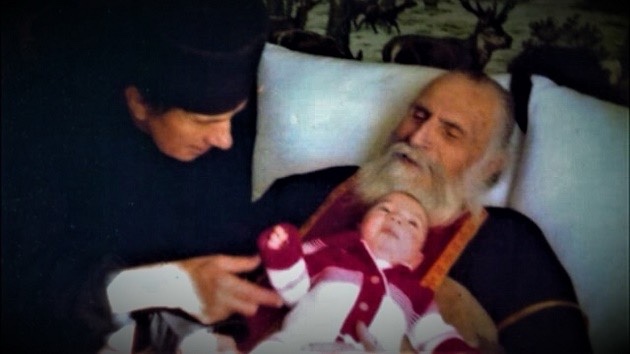
On the left is Monk Zosimas (+2010) with Elder Simon Arvanitis (1901-1988) on his deathbed blessing the child of a spiritual child of his.

*** Incl. St Nektarios’ prophesy about Elder Simon, and St Porfyrios and St Iakovos Tsalikis words for him.***

Panagiotis, Elder Simon’s baptismal name, was a man of unbelievable physical and spiritual strength. He grew up helping his large family by working as an itinerant greengrocer or as a laborer on estates. Endowed with great muscular strength, from the age of thirteen he was lifting sacks weighing 80 kilograms or more. His favorite occupation when he rested, was the study of the Gospel. On Saturdays, as soon as he finished work, he went to the chapels for prayer and study, abstaining entirely from all food, until Sunday evening, when he returned to his house and ate.
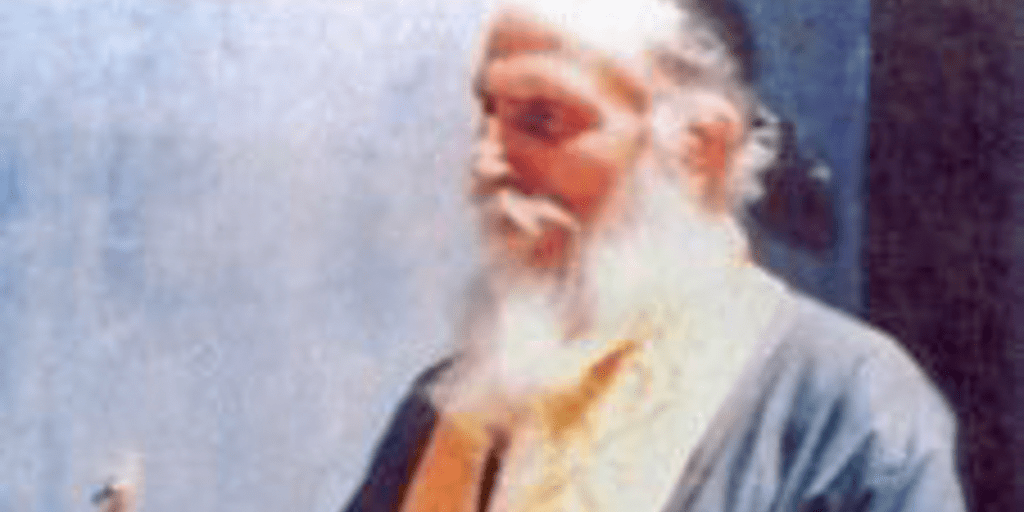
Panagiotis visited Mount Athos a few times. When he was young he liked to go on long journeys. Once he started from Athens and walked to Ouranoupolis. There he put his clothes on his back and swam to Mount Athos!

His visit to Kavsokalyva of Mount Athos at the age of 16 was to seal his life. There the Fathers were gathered and waiting for Metropolitan Nektarios Kephalas to arrive, our well-known Saint Nektarios [the Bishop of Pentapolis and Wonderworker], who would be visiting them.

When he arrived, one by one the Fathers approached him reverently and received his blessing. After the Fathers did this, the pilgrims followed. In his turn, Panagiotis also went to receive the blessing of the Saint. Saint Nektarios then took him by the hand and said to him prophetically:

“You, my child, will become a spiritual father and save souls. To the man who will come to you and speak of his sin for the first time, though he did not know that what he did was a sin, be lenient and do not let him go. But if he comes and continues in his sin, be strict with him and rebuke him.”

The prophecy of Saint Nektarios took place when the fullness of time came. Panagiotis later became Father Simon, who indeed saved many souls.
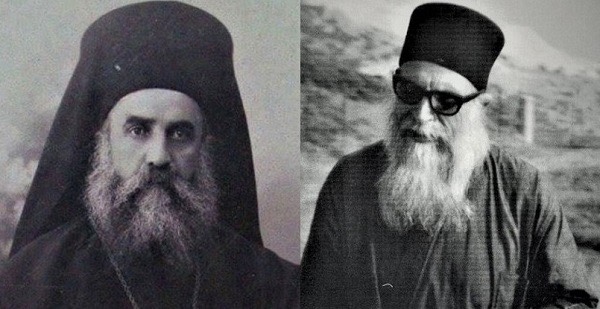
Saint Nektarios and Elder Simon

Other contemporary Saints such as St Iakovos Tsalikis also came to know and admire Fr Simon’s selflessness, wisdom and love, which have inspired countless struggling Christians during his life and after his blessed repose. St. Porphyrios had said of him that no one else had such faith as Elder Simon’s!

Hesychastic years in the cave of Saint Gregorios followed, until the then Metropolitan made Panagiotis a monk in Agios Charalambos and gave him the name Simon. He longed to be a cave-dwelling hermit, and continually begged this from the Monastery elders. The elders prayed for a week to Panagia to determine the correct path. After a week, Simon was told: “The Holy Mother informed us that you must return to the world which needs you to be led to salvation”.

In obedience, he was ordained a priest-monk and started serving local parishes and chapels at Athens suburbs, and later the monastery of St.Panteleimon, Mt.Penteli, which he founded.
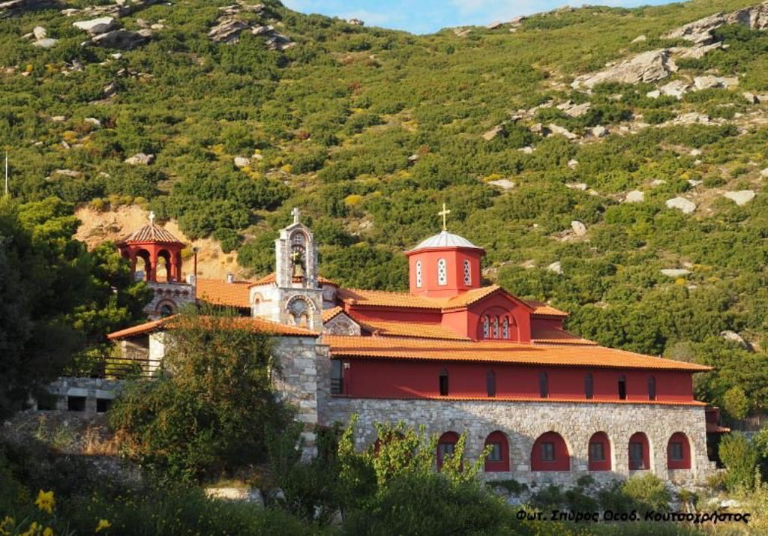
St Panteleimon Monastery, Panteleimon

One of the first monks there, Zosimas, had a phobia of the dark. Fr Simon prayed over him and allowed him to sleep in his own cell while he, the elder, slept on the roof of the cell. Zosimas had a dream that the devil appeared and said: “Your Elder is up on the roof and I can’t come inside”. With the prayers of Fr Simon, he was healed.

One of the most well known miracles of Elder Simon is the miracle of the huge hare and the starving pilgrims in 1943. That time, he was appointed a Spiritual Father at the Monastery of the Transfiguration, near which there is a small chapel, dedicated to the All-Great Taxiarches. In 1943, on the eve of the festival, a large number of people had flocked for the celebration, at a time when hunger oppressed the people and the idea of food at a festival seemed like a dream. The only edible thing there was a sack of onions. However, Father Simon, taking pity on the hungry people, in imitation of Christ our Lord, and with unshakable faith in God’s providence, ordered them to clean all the onions and immersed himself in prayer. And suddenly, before the astonished eyes of the pilgrims, a huge hare came down from the mountainside and entered the kitchen all alone, on his own, offering himself for their meal! And the pilgrims, just like in the miracle of the multiplication of loaves, “all ate and were satisfied”, and there were plenty left overs.

What a “shocking” miracle! Poor huge hare! Even more shocking for me and many people who never eat animal’s meat. But these times were very trying ones and hundreds of people were literally dying from starvation every day! See footnote below*

Fr Simon reposed in 1988. On the day of his burial, the grace of God was evident. The Metropolitan approached to kiss his body and the elder lifted his hand for the Metropolitan to kiss! What a blessed Elder and yet another revelation to us during our recent pilgrimage to Athens/ Aegina! Christ is Risen!

*

* One of the greatest calamities of the Greek people during the years of the Nazi Occupation was the terrible famine of 1941-1942 which claimed the lives of at least 300,000 people and caused serious illness in approximately 1,500,000. The spectre of hunger soon began to dominate. Children were among his first victims. They wandered around hungry, ragged and barefoot looking in the garbage to find something to eat. Bones, fruit skins and food scraps were the only food for many. On the sidewalks, many fainted from hunger began to fall, while the weakest organisms succumbed to the fatal… In the few ration centers the daily menu was as follows: pumpkins 100 drams, tomatoes 3 drams and onions 8 drams (without oil). Note that the oka had 400 drams and was equivalent to 1,282 grams. It is estimated that at least 200,000 contracted tuberculosis during the Nazi Occupation. 300,000 died of starvation and 1,500,000 became ill from malnutrition. The total calories from this “snack” were 290, of which only 200 were usable by the human body. Nonetheless, 500,000 infants, 500,000 toddlers, 1,200,000 children and many teenagers who needed the scrapbooks were fed on this 200 calories daily menu for months! On the streets, the chilling and macabre sight of the dead being carried for burial in two-wheeled wooden carts and with a cleaning cart began to appear. The dead were piled up, first by the tens and later by the hundreds in cemeteries unburied, as there were not enough undertakers to bury them! The unburied dead from starvation soon became a very serious problem. In streets, squares and courtyards of houses, people were dying every day and their bodies remained there, where they collapsed, until a Municipal cart passed by to collect them and take them to the cemeteries. But there was a problem there too: the undertakers were few, they too were exhausted from hunger and the dead were many. Others left their dead relatives outside hospitals and others outside cemeteries, stealing the dead’s identity documents in order to appropriate the pension they were entitled to. Protothema, my translation.


For more miracles of , go to Orthodox Christianity Then And Now here and here .

A Miracle by St. Etheldreda

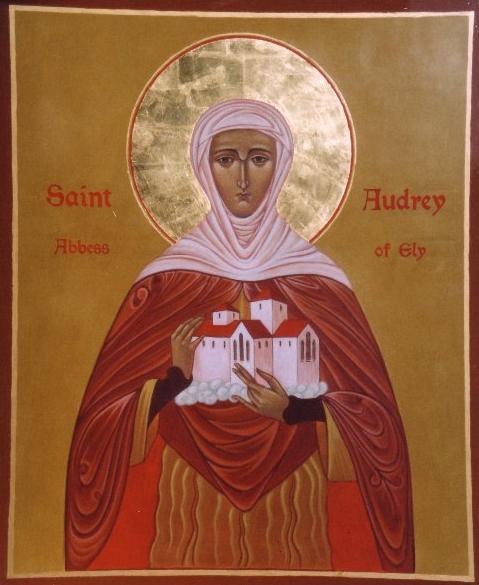
In thee the Image of God was preserved, O noble Audrey, for thou didst take up thy cross and follow Christ. Royal virgin, thou didst teach the multitude by thine example that the flesh is to be scorned as fleeting, while the soul needeth great care as immortal. Wherefore, O holy Audrey, thou dost now make glad with the angels.

VENERABLE ETHELDREDA, ABBESS OF ELY

Commemorated: June 23

Holy Queen St. Etheldreda, Abbess of Ely (AD. 636-679), (Aethelthryth, Audrey) is the most venerated English female saint. A Saint renowned for her perpetual virginity-despite her two marriages!- and glorified by incorruption.

Back on 18th July 2018, the Saint decided to make a powerful entrance into our lives, revealed herself as the patron Saint for our fellowship, and Father J. organically became the fellowship’s spiritual Father.

A powerful entrance indeed! I remember most vividly how we folded various female saints’ names as potential patrons in lots, put them in Father’s skoufia to draw, and when her name was picked and Father started blessing us with holy water, these ‘water’ drops burned, literally so, the surface of the table where the water bowl was placed on! Perplexed we turned to Father to explain to us what was happening, but he bowed and left in silence. God is glorified in His Saints!

What we found most moving in St Etheldreda’s podvig was the central role her spiritual father, St. Wilfrid of York, “the Apostle of Sussex”, played throughout her brief, yet tumultuous and full of suffering, sanctified life. This most powerful Patron Saint, always ready to help everybody in distress, especially married women in trouble with their husbands, humbly obeyed her spiritual father in every step she made and decision she took in her life. A holy rebel and a scandal she was, yet always under an Omoforion and an Epitrahelion!

To begin with, it was her spiritual father, who blessed her vow of chastity at a very young age and guided her during all her patient waiting for 15 or more years, until she would become a nun. (And until she had been twice married!) 

St. Wilfrid was such a close adviser to her that Egfrith, hew lawful, second husband —her first husband had already reposed after three years of “marriage” —entreated him to use his influence to induce his wife to become, in fact, what, as yet, she had been only in name. He even promised Wilfrid great things for himself and for his churches, should he be able to persuade the Queen that her duty to God was her duty to her husband. But Wilfrid feigned to enter into the King’s view of the matter, whereas, in fact, he steadfastly encouraged the Queen to persist in her celibate life and even advised her to ask permission to leave the court and become a nun. (Egfrith never forgave him.) 

During one of her escapes, it was St. Wilfrid who tonsured her a nun, and later on, when St Etheldreda eventually retreated to Ely and founded a double monastery there with communities for monks and nuns, who lived separately but prayed together in the common church, and became the first Abbess, her spiritual father continued to support her. It was St. Wilfrid who made her abbess and gave the veil to her first nuns. He obtained special privileges for her, from the Pope, and often visited her and helped her with advice and suggestions useful in the management of her large establishment. 

We found most moving this strong connection of the Saint with her spiritual Father. Nothing seemed to be able to separate her from him. Through her example, we understood more clearly how essential for all of us and vital in our sanctification is our obedience to a spiritual Father, especially through the sacrament of Confession, in the Church. Especially in times of suffering and temptation, when only the Church, the Saints and your spiritual father can truly support you and be your Rock, your icon of Christ the Rock.

This holy relationship between the faithful and their spiritual Fathers is a pattern we observe in many Celtic women Saints. For example, St Dymphna and her spiritual Father, St Gerebernus, fled together defying the Father King’s immoral demand to marry his daughter, crossed the Channel, and eventually faced martyrdom together. St Winifred and St Beuno is another like Celtic holy pair, where Winifred, from an early age, was instructed in the spiritual life by St. Beuno and lived under his care a chaste life, dedicated to God, until she met her martyrdom. Beuno took Winifred’ head and replaced it to her body, then prayed to God that she be restored whole. By St. Beuno’s prayers, Winifred came back to life. This miracle was just one of many in their holy relationship and life together until their glorification.

St Etheldreda, a queen and most powerful lady, is setting a clear example to us how important it is to endure the martyrdom of the dying of our will in our obedience to our spiritual father, in order to overcome our fallen nature, our old self, our tendency to become autonomous, form our own opinions, and become thus self-centred rather than God-centred. In all our life’s decisions, momentous or ‘small’. St Etheldred, the Saint and queen, may have abandoned two husbands but understood all too well that following our conscience and not acting in obedience, even in our most ‘pious’ endeavours, is a very tricky path and most of the times, if not all, the beginning of prelest.

By C.

Saint Paraschiva of the Balkans

Saint Paraschiva of the Balkans2Saint Paraschiva of the Balkans

Saint Filothei was the first to arrive in my home, but the most tenacious saint was Saint Paraschiva of Iaşi.

I feel most humble and sad about my behaviour to Saint Paraschiva. The story goes that around 10 years ago a very pious Romanian lady moved away and gave me a quantity of spiritual books and religious objects and icons. I was by then more open to icons and decided I had to find a place for them. Since I had little contact with the Romanian church, I had not actually heard of Saint Paraschiva and did not know who she was. There was a very large and imposing icon of her, which I placed in the dining room as the only room large enough to accommodate it. There it remained, but I never felt any connection with it. I found it a little frightening if anything.

A few months ago, I decided I had to make room for more icons because the saints were beginning to arrive to my home in numbers. I decided to ask of my Romanian friends if anyone could accommodate St. Paraschiva. Someone was thrilled to welcome her, and I was so humbled to see the love with which this friend took the icon. Back home I felt a little sad that I was so lacking in love and hospitality. Since the lockdown began, I started tackling my cellar which is a little like Alladin’s cave, but mostly full of old and useless things. Hidden behind a pile of books I found a very large print of St. Paraschiva!

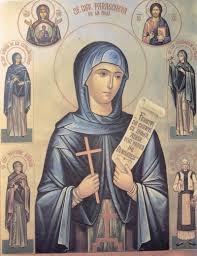
I have no idea where it came from. My heart leapt up with joy and found it very beautiful. I felt she gave me the chance to make up for my previous indifference and unkindness. I placed her icon at the centre of my icon corner, and everything felt right in the house after that. How patient and kind the Saint was! Around the Figure of the saint there are 4 other Romanian women saints among which St Filofteia herself. I would like to think that she brought friends. I might be wrong, but I feel the arrival of these Romanian great saints is like a call from afar for me to go back in some way to my spiritual roots and discover new riches.

Anyway, St Paraschiva is here to stay at the heart of my home, and I hope that through prayer we may become closer and closer. Reading about her life was most interesting because I had thought she was a purely Romanian saint since her relics are to be found in Iaşi and there is such great devotion to the saint all over Romania. I remembered that two parishioners had a very lively argument about Saint Paraschevi or Paraschiva or Petka (not to be confused with St Paraskevi of Rome, 2nd century martyr) and whether she was Romanian or Greek. Both ladies must have loved her very much and wanted to claim her as their own. As a matter of fact, she is well known and greatly loved in all Orthodox countries.

I discovered that she was as most people know, born in modern day Turkey of Byzantine parents in the 11th Century. As a child, she heard the words of St Mark’s Gospel in church: “Whoever wants to come after Me, let him deny himself, and take up his cross, and follow Me,” and was greatly moved. They awakened in her great zeal to relinquish her comfortable life and embrace asceticism. She gave away all her clothes to the poor. As her family opposed her calling, she ran away from home to Constantinople and then to Chalcedon and then to Heraclea Pontica. The Theotokos appeared to her on many occasions. She lived a very austere life and her voyages took her to Jerusalem, where she wanted to spend the rest of her life.

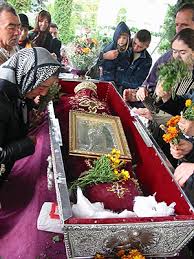
She entered a monastery in the Jordanian desert where she lived a greatly ascetic life. She saw an angel who asked her to return to her birthplace, where she continued her life for 2 more years as a stranger. She died at the age of 27. Her body was buried by the sea as a stranger in an unmarked place. By divine providence, her body was discovered uncorrupted and placed in the church of the Holy Apostles and great miracles were performed by the saint there. Her relics travelled all over the Balkans including Greece, Bulgaria and Serbia until, in 1641 her relics were brought to Iaşi in Romania. On the 26th December 1888, her relics have miraculously survived a great fire which turned to ashes everything around except the relics of the saint.

Her feast day is on the 14th October. Pilgrimage at the shrines located in the Metropolitan Cathedral of Iaşi has become one of the major religious events in Romania. Hundreds of thousands of pilgrims gather each year in Iaşi in the second weekend of October to commemorate St. Parascheva, while the city itself established its Celebration Days at the same time. Innumerable are her miracles and it seems whatever the problem, Saint Paraschiva will intercede successfully.

Troparion of St. Paraschiva, Tone 4:

You are worthy of praise, Paraskeva. You loved the ascetic and hesychast life. You ran with longing to your Bridegroom, Christ. You accepted His good yoke in your tender years, marking yourself with the sign of the Cross. You fought against impure thoughts; through fasting, prayer and the shedding of tears you quenched the burning coal of the passions. Now in the heavenly bridal chamber of Christ, as you stand together with the wise virgins intercede for us who honor your precious memory.

Kontakion of St. Paraschiva, Tone 6:

Let us all piously praise all-honorable Paraskeva, the intercessor for the afflicted. She gave up her earthly life and received eternal incorruption. Therefore, she has been granted the grace to work wonders by the command of God.

ENCOUNTERS WITH SAINTS/ PART B

By Alexandra McC.